
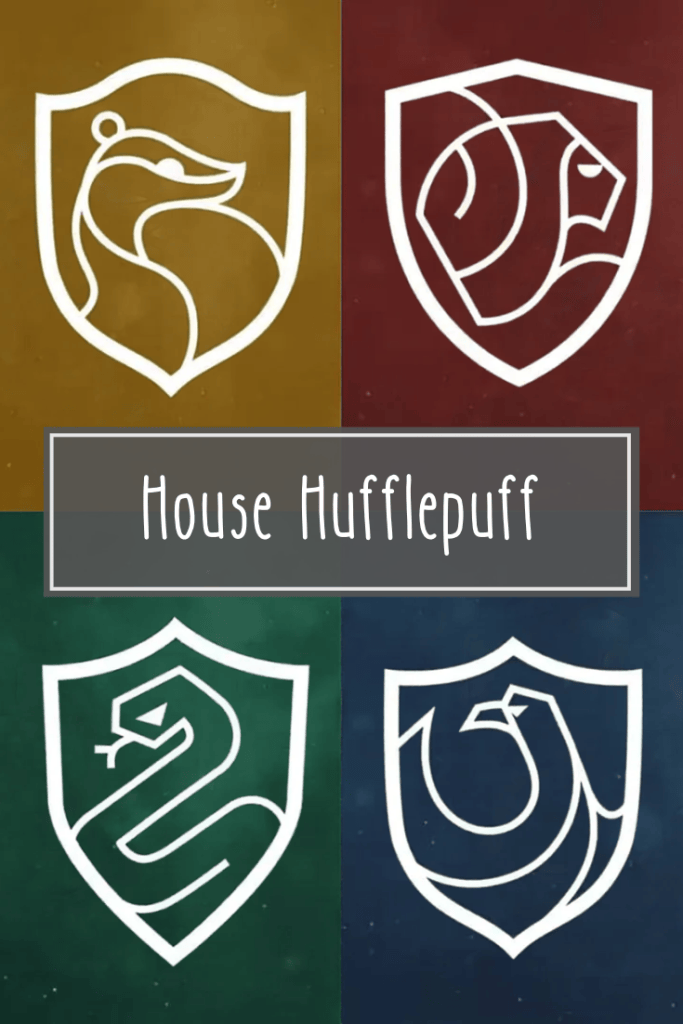
You might belong in Hufflepuff,
Where they are just and loyal,
Those patient Hufflepuffs are true
And unafraid of toil… – Harry Potter and the Sorcerer’s Stone
Oh, those good‑natured Hufflepuffs. The Sorting Hat isn’t looking for brilliance, boldness, or cunning in this house; it’s looking for character. Hufflepuff welcomes those whose goodness is steady, practical, and dependable, even when they show it quietly. A young witch or wizard is sorted here when their core qualities reflect the traits Helga Hufflepuff appreciated most:
- Loyalty — sticks by friends, keeps promises, and shows devotion to people or causes; one of Hufflepuff’s defining traits
- Hard work & dedication — those who try, persist, and don’t shy away from effort
- Patience — tolerate slow progress, wait their turn, and don’t need instant gratification
- Fairness and justice — a strong sense of right and wrong, equal treatment, and playing by the rules
- Kindness and inclusion — welcomes others, especially those overlooked
- Modesty — don’t seek glory or attention, they just quietly do what’s needed
The Sorting Hat notices the small, steady patterns that show up early in a child’s life, like helping without being asked, showing gentleness with younger children or animals, or consistently putting in effort and following through. These quiet habits define Hufflepuffs. They choose goodness in regular, sincere ways, and because their strengths aren’t loud or dramatic, Hufflepuffs are often underestimated.
However, as we’ve come to know, their goodness can create challenges. When a Hufflepuff is stretched too thin, patterns like over‑accommodation, conflict avoidance, self‑neglect, stubborn endurance, and difficulty setting boundaries often show up in everyday behavior. For instance:
- They take on too much because they don’t want to disappoint anyone.
- They stay loyal to people or groups long after the relationship stops being healthy.
- They avoid confrontation even when something needs to be addressed.
- They quietly carry emotional or practical burdens for others.
- They keep working long past exhaustion because they feel responsible.
Hufflepuff’s integrity, patience, and loyalty can become liabilities when they aren’t balanced with self‑advocacy. Their kindness and dependability are strong, but the skills that support those traits, such as assertiveness, emotional regulation, flexible thinking, and boundary setting, are still developing. They simply haven’t mastered the social and emotional tools needed to keep their instincts in balance.
Cedric Diggory is the main Hufflepuff student in the series and he is altogether a great student and wizard. He is popular, handsome, and except for Moaning Myrtle’s dig about it taking forever for him to figure out the Triwizard egg, we can deduct that he probably would’ve won the Triwizard cup outright. And yet, he’s still understanding and helps Harry throughout the entire tournament, leaning into friendship and not competition.
We get an extra peek into Hufflepuff with Nymphadora Tonks and Newt Scamander. Although they are adults in the Wizarding World, Tonks and Newt provide unconditional support when fighting Voldemort and Grindelwald, respectively. Tonks falls in love with Remus Lupin and supports him through rough patches and discrimination from being a werewolf. Dumbledore recruits Newt to help defeat the most dangerous dark wizard of that time, and yet he still has time to write “Fantastic Beasts and Where to Find Them.”
How to Parent a Hufflepuff
Parenting a Hufflepuff is about protecting their kindness while strengthening the skills that keep that kindness healthy. They already lead with kindness, so our job is to strengthen the tools that support it:
- Teach gentle assertiveness. Hufflepuff kids often say yes too quickly, so they benefit from simple scripts that give them space to think, such as “I need a minute to think,” “I can help after I finish my own thing,” or “No, thank you.” Practicing these phrases helps them build autonomy without feeling unkind.
- Normalize conflict as communication. They often avoid conflict because it feels tense and uneasy, so they need to see that disagreements can be safe and solvable. You can model this by using a calm tone, repairing after conflict, and naming your feelings clearly, such as saying “I’m frustrated, not mad at you.” Over time, this helps them learn that conflict isn’t danger.
- Help them notice their own needs. Hufflepuffs often forget to check in with themselves, so gentle prompts can help them pause and notice their own needs. Asking questions like “Is your body tired?”, “Do you want a break?”, or “What do you want to do?” strengthens their interoception and self‑awareness, giving them practice tuning in to what they feel instead of defaulting to what others need.
- Encourage flex thinking. Their loyalty and persistence can sometimes turn into stubbornness, so it helps to practice flexible thinking together. Try brainstorming multiple solutions, asking “What else could work?”, and celebrating pivots with encouragement like “Trying something new is brave.” These small habits teach them that adjusting course is a strength, not a failure.
- Build boundaries as a kindness skill. Frame boundaries as something that protects relationships rather than rejects people. You can teach this by giving them simple, kind phrases like “I care about you, and I need space” or “I can play, but only for 10 minutes.” These gentle limits help their empathy stay healthy instead of turning into self‑sacrifice.
A Hufflepuff doesn’t need to be tougher. They need guidance that helps their big heart coexist with healthy boundaries. The goal is to preserve their gentleness while strengthening the skills that protect them from burnout, overwhelm, and being overshadowed by stronger personalities.
Related Posts:
House Gryffindor
House Ravenclaw
Like this post? Follow Child(ish) Advice on Facebook, Pinterest, Instagram, and TikTok.
Sources:
Rowling, J. K. (1999). Harry Potter and the Sorcerer’s Stone. Scholastic.
Harry Potter | Official home of Harry Potter, Hogwarts Sorting, and the Wizarding World
Hufflepuff Traits: Personality, Strengths & Weaknesses

