Child(ish) Reads: All Toddlers are Scorpios

When I saw this Forthcoming book listing, I thought it was the perfect way to end our Halloween posts.

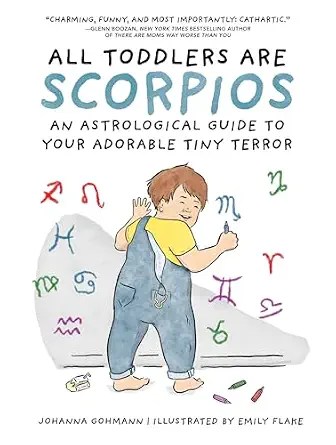
All Toddlers Are Scorpios: An Astrological Guide to Your Adorable Tiny Terror by Johanna Gohmann. Blending parental exasperation with cosmic insight, Gohmann breaks down toddler personalities by zodiac sign—offering a starry-eyed (and slightly frazzled) look at the joys and mysteries of raising tiny humans. The profiles of each zodiac sign include sections dedicated to best (and worst!) toddler playdate matches; toddler’s preferred music, snacks, and toys; parent-child zodiac compatibility; and hilarious illustrations throughout from cartoonist Emily Flake. Whether you are raising a tenacious Taurus, a balanced Libra, or, yes, a hell-raising Scorpio, this is a book that lets parents laugh at the sheer insanity of sharing their home with a tiny terror.

Continue reading →
Child(ish) Reads: Soccer Dad

This summer, I had a super quick Audible that I really enjoyed. We’ve had several posts on navigating youth sports, from why they are awesome to how they can be detrimental. What I was missing was a non-biased first-hand parent account.

What I liked about this short memoir from David Murray is that he fully admits that he’s not “sporty”. He knew nothing about soccer. He wasn’t going to be a de facto coach, and he wasn’t going to push his daughter to uphold a family legacy. This is his parent story of how his daughter, Scout, started in kiddie soccer and followed her soccer goals all the way through her graduation at Ohio University.

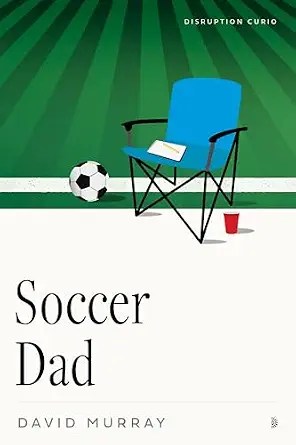
Soccer Dad by David Murray.
Blurb: Soccer Dad is the story of a soccer-ignorant, sports-ambivalent writer who saw his daughter from the kiddie leagues through the travel-sports gauntlet to a coveted Division I scholarship. And then realized his work had only begun.

David Murray’s daughter, Scout, loved soccer from toddlerhood. Her drive and skill pulled the Murray family into the world of youth sports—one as culturally obsessive as it is economically exclusive, where each new achievement presents more challenges.

Youth sports is fun, but it isn’t simple—especially for parents determined to raise a rounded human being.

Continue reading →

Child(ish) Reads: Never Enough

This book came out three years ago. I didn’t jump to review it because at the time, our kids were only 5. That’s a bit young to start worrying about achievement culture. Now, even though high school and applying to colleges are far off, there are still big parts of this book that speak to child development; both academically and personally.

The book also gives more nuance and research to our education system, and sheds more light on that pesky Gen Z: Cautionary Tale thing. It’s a great book to start your school year.

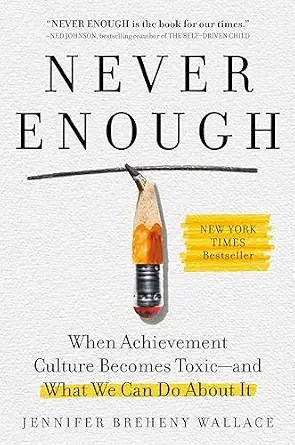
Never Enough: When Achievement Culture Becomes Toxic-and What We Can Do About It by Jennifer Breheny Wallace.

Continue reading →

Child(ish) Reads: Dopamine Kids, Pt. 2

In part 1 of my Dopamine Kids review, I said that Michaeleen Doucleff’s five-step plan is very easy to implement. She walks through each step and gradually builds the plan with each chapter. Just like a textbook, you read the material in the first section and do the direct application right after.

So for part 2, I’m sharing my family plan and how I’ve adapted the steps for A&Z.

Continue reading →

Child(ish) Reads: Dopamine Kids, Pt. 1

I was very excited to receive my pre-ordered audiobook of Dopamine Kids by Michaeleen Doucleff. Yes, the same Michaeleen Doucleff from Hunt, Gather, Parent. It has been 5 years since I reviewed that book, and I love how Dopamine Kids fits in so perfectly with all of our Brain-Body posts this month.

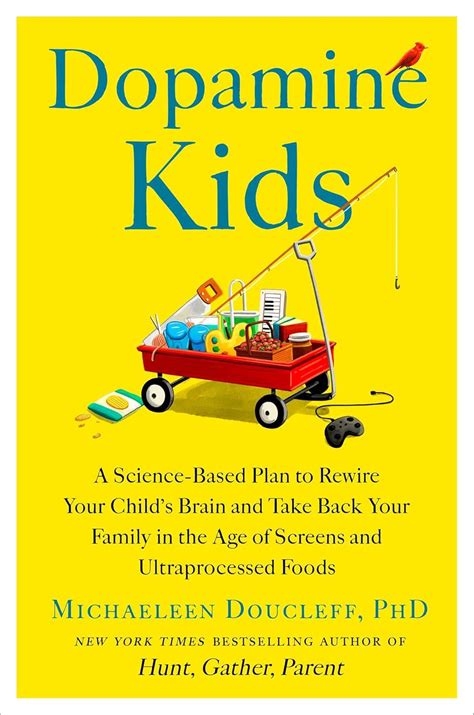
Dopamine Kids: A Science-Based Plan to Rewire Your Child’s Brain and Take Back Your Family in the Age of Screens and Ultraprocessed Foods by Michaeleen Doucleff.

Blurb: For the first time in history, we are inundated with “dopamine surges” inside our brains, pulling us to technology and ultraprocessed foods like magnets—every day, many times a day. Over the past decade, neuroscientists have finally begun to figure out how these surges alter our choices, our habits, and even our moods. We’ve learned how dopamine can drive adults and kids to engage in activities that we don’t actually enjoy—activities that can make us feel sad, lonely, anxious, and depressed.

Continue reading →