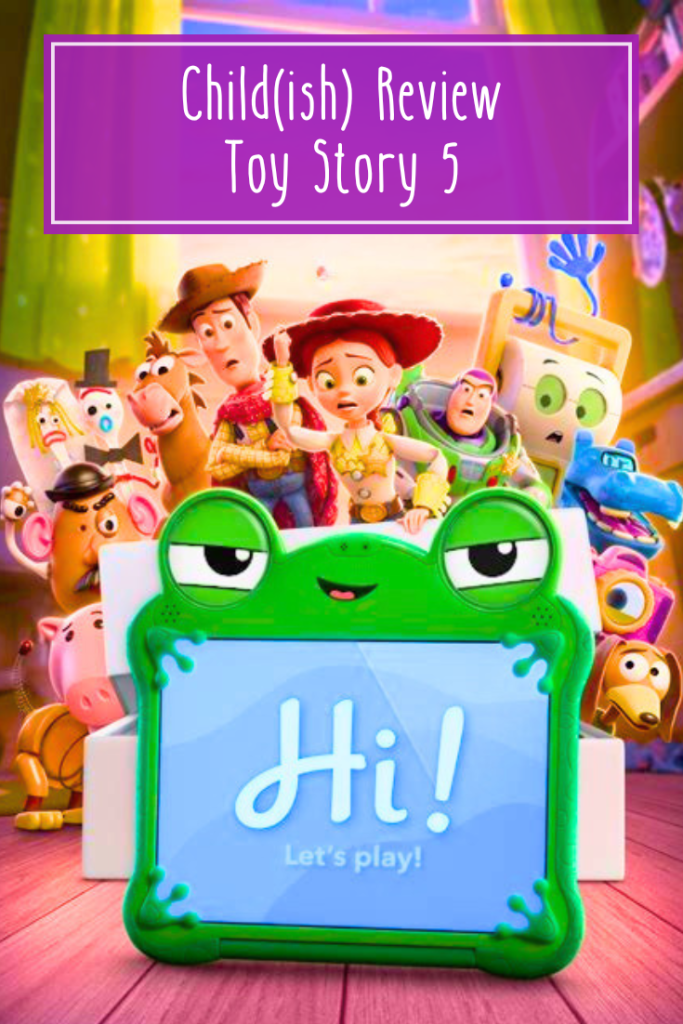
Child(ish) Review: Toy Story 5

I’ll be honest, I never really got into the Toy Story franchise. I know Woody, Buzz, and Jessie are beloved icons, but I just wasn’t into sitting down and watching the movies when they came out, and even now as a parent. So when Patti told me Toy Story 5 was coming out and I casually mentioned that I was indifferent, the gasp she let out was audible. For reference, the first Toy Story came out when we were 10.

But then the Toy Story 5 trailer dropped, Lilypad appeared on screen, and suddenly I was fully invested. In this installment, Bonnie is introduced to a new high‑tech tablet which completely disrupts the balance of playtime, forcing Jessie, Bullseye, Buzz, Woody and the rest of the gang to confront what it means to matter to a child in a digital age.

Toy Story 5 is essentially a child‑development case study wrapped in a Pixar movie. The film directly tackles themes that map onto core developmental domains: social-emotional growth, imaginative play, peer relationships, technology use, and the psychological experience of being “enough.”

Continue reading

OT Month: The Gen A Nervous System

A few months ago on Instagram, we ran into a ton of posts about how you can’t parent Gen A kids like they did in the 90’s because they have a different nervous system.

We thought it was an interesting claim; despite that when “influencers” copy the same material word-for-word, it’s usually a sign of clickbait. They even referred to kids having a “Digital Nervous System”, living in a high-speed brain environment.

Continue reading

Child(ish) Reads: Dopamine Kids, Pt. 2

In part 1 of my Dopamine Kids review, I said that Michaeleen Doucleff’s five-step plan is very easy to implement. She walks through each step and gradually builds the plan with each chapter. Just like a textbook, you read the material in the first section and do the direct application right after.

So for part 2, I’m sharing my family plan and how I’ve adapted the steps for A&Z.

Continue reading

Child(ish) Reads: Dopamine Kids, Pt. 1

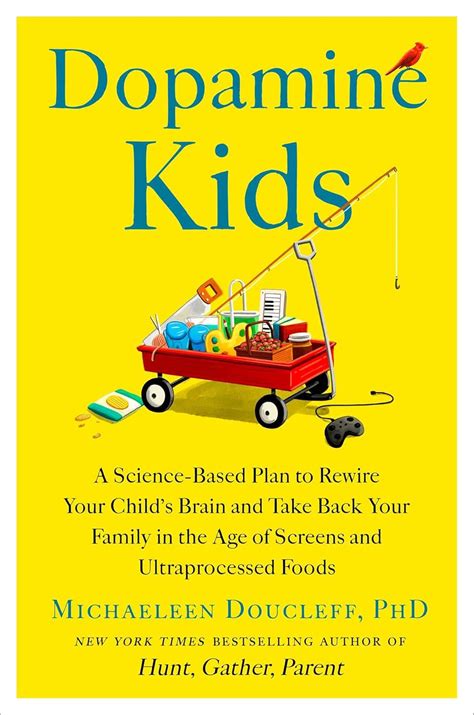
I was very excited to receive my pre-ordered audiobook of Dopamine Kids by Michaeleen Doucleff. Yes, the same Michaeleen Doucleff from Hunt, Gather, Parent. It has been 5 years since I reviewed that book, and I love how Dopamine Kids fits in so perfectly with all of our Brain-Body posts this month.

Dopamine Kids: A Science-Based Plan to Rewire Your Child’s Brain and Take Back Your Family in the Age of Screens and Ultraprocessed Foods by Michaeleen Doucleff.

Blurb: For the first time in history, we are inundated with “dopamine surges” inside our brains, pulling us to technology and ultraprocessed foods like magnets—every day, many times a day. Over the past decade, neuroscientists have finally begun to figure out how these surges alter our choices, our habits, and even our moods. We’ve learned how dopamine can drive adults and kids to engage in activities that we don’t actually enjoy—activities that can make us feel sad, lonely, anxious, and depressed.

Continue reading

Back in the Day: Attention

No one can escape the stories from older generations about what life was like when they were growing up. They talk about walking miles to get anywhere, playing outside until the sun went down, or buying a soda for a nickel.

And sometimes, those stories come with the reminder that “back then” there was no such thing as ADHD, or food allergies, or emotional trauma, etc. If you’re lucky, they may even suggest that if parents tried a bit harder or used a little more discipline, children these days would be able to sit still and pay attention. Bless their hearts.

The truth is that the kind of attention kids (and adults) need to thrive today is not the same type of attention that was required 30 or 50 years ago. Our society/environment has changed so dramatically that the “old model” of attention (sit still, focus for long stretches, ignore distractions) is only one part of the picture now.

Continue reading