OT Month: The 504 Plan

If your child doesn’t qualify for an IEP, a 504 Plan might fit. It may sound like a highway number or a health code, but it’s actually a legal support that ensures students get the access they need to participate in school.

A 504 Plan is a school-based support plan that provides students with disabilities the accommodations they need to access learning alongside their peers. Its purpose is to adjust how a student learns, not what they are taught.

Continue reading

OT Month: The IEP

When you’re navigating support services in the school system, it can feel like an alphabet soup (OT, PT, MTSS). This post is all about the IEP.

An IEP, or Individualized Education Program, is a legal, written plan that explains exactly how a public school will support a student with a disability in order to facilitate their learning and make progress. It’s part of the federal special education law called IDEA (Individuals with Disabilities Education Act), and it guarantees students access to a free appropriate public education (FAPE).

Continue reading

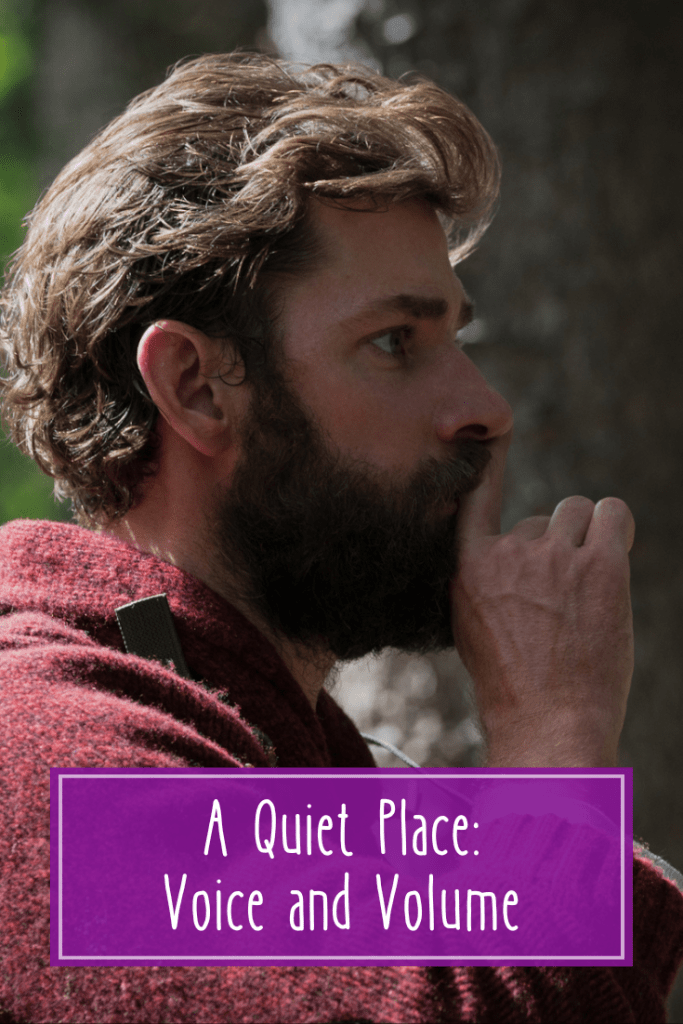
A Quiet Place: Voice and Volume

Lee Abbott (signing): You cannot go down there!
Regan Abbott: Why not?
Lee Abbott: You know why.
Regan Abbott: I’m not a child! I won’t make a sound!
Lee Abbott: Just don’t. Please.

“Quiet” isn’t the first word that comes to mind when describing kids. More often, they fill every corner with sound—shrieks of joy, dramatic retellings, spontaneous dinosaur roars. Children tend to operate at full volume…unfortunately. As it turns out, there are real, developmental reasons behind all that noise.

Kids tend to be loud, not because they’re misbehaving, but because they’re still learning. Self-awareness, emotional regulation, and social cues are all works in progress. They’re figuring out how to read the room, tune into themselves, and turn the volume dial down. Add in boundless energy and curiosity, and volume becomes part of how they explore, connect, and express themselves.

Continue reading

Actions are Louder Than Words: The Speech and Movement Connection

Talking doesn’t start at the mouth. Before we can speak or give meaning to language, we must learn to move.

Movement is necessary to explore our surroundings and travel from point A to point B (even if it is just to the couch). Motor development relies on the teamwork of the tactile (touch), proprioceptive (body awareness), and vestibular (movement) systems to establish a physical awareness of self to feel safe and move without fear.

Research has shown that achieving motor milestones may also be closely linked to unlocking cognitive abilities, like speech and language.

Continue reading

Making Sense About Speech: Sensory Integration and Speech

Speech and language are not easy skills to achieve. Before we can talk or make sense of what people are saying, our sensory foundations must be established. This explains why most kids aren’t fully conversational until around 3 years old.

For example, intelligible speech can’t happen without the cooperation of the vestibular (movement), proprioceptive (body awareness), and tactile (touch) systems who govern the fine motor movements, coordination, and motor planning of the throat, lips, and jaw. If we are to understand a conversation, our auditory (hearing) system needs to differentiate between sounds of words to not mix up what someone is communicating to us.

This all ties back to sensory integration.

Continue reading