
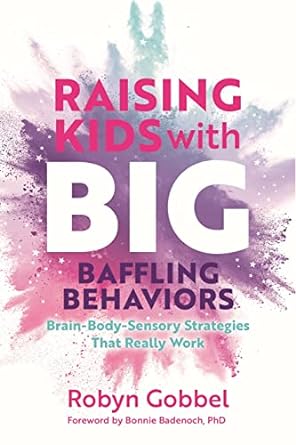
Back with Part 2 of our Raising Kids with Big, Baffling Behaviors review.
We got into what goes on in our kid’s brain when they are dysregulated and showing bad behavior. But it takes two to tango, and how we react to our kids during the tumult matters.
So here are the parent takeways that help us keep our heads:
The Parent Owl Brain
So we want our kids to stay in Owl brain, but it’s just as important that we stay in Owl brain as well. Bad behavior is a huge stimulus and throws us into Watchdog brain very fast. But sometimes, it’s not just the bad behavior. It could be the inconvenience or timing of it, the frustration of the behavior happening repeatedly, the stress of what other people might think. We might feel like our child should “know better” when really it’s not age-appropriate yet.
Sometimes the stress of trying to be a good parent and feeling like your failing can push us into Watchdog brain before the bad behavior even happens. The first step is to just notice that you’re having an intrusive feeling or a dysregulated mindset before you unwillingly get on this defensive Watchdog rollercoaster.
How can we grow our own owl brain? The same way we grow as parents.
We reflect on ourselves and our past. We give ourselves a short pause before we respond. We keep our body in check by eating/drinking/snacking when we need to. We pay attention when we are feeling stressed and ask for help from our partner when we don’t have the energy or bandwidth.
A common problem that I find with parenting books is that 9 times out of 10, they are talking to the mom and that mom only has one kid. So please make allowances and adjustments if you have more than one child or if you are sharing this information with your partner. Siblings, secondary caregivers, blended families, single-parent families; these all come with their own dynamics and stress, and it may be easier or harder to stay in a regulated state of mind.
“Regulated, connected parents who feel safe parent well. The way they want to. The way that matches their values.”
Stop the Narrative
Yesterday, I mentioned that sometimes we jump to the conclusion that our child might be misbehaving in order to get what they want. If I cry, then I get this. The book explains that when a kid is dysregulated, they don’t have the higher-level reasoning to be manipulative.
Another misconception that parents are guilty of is that we need to actively punish our kids when they behave badly. In most cases, our view of traditional punishment is negative. Do something that they hate so much that they will be too scared to repeat the bad behavior. Sounds a bit harsh now, right?
“Knowing that all behavior makes sense does not mean all behavior is acceptable…. I make a point to validate your feeling, without validating your conclusion.”
“Compliance is different from cooperation. Cooperation is about meeting the needs of both people involved, but compliance is typically more fear-based and involves the needs and desires of the more powerful person.”
Other false narratives that parents commonly bring to therapy:
Bad behavior is a character trait.
False. Just because your kid did something bad, does not make them a bad kid. Just because your kid is acting lazy, doesn’t mean they are a lazy person.
I’m a bad parent because my kid did something bad.
False. You as a parent cannot control your kid’s brain, nervous system or actions.
If I don’t punish the action, they will think they got away with it.
False. Gobbel uses this great scenario in the book pertaining to punishments.
A kid flushes a squishy toy down the toilet and soon it floods the bathroom. What is the consequence?
You could send the kid to her room, but that doesn’t necessarily stop her from flushing another toy.
You could say no dessert, but what does dessert have to do with the bathroom?
You could take all her toys away, but does that really fit the scenario?
Some other appropriate options: Monitor the bathroom and toilet paper. Put a lock on the toilet cover so she needs supervision to go to the bathroom. No new squishy toys. The child might see the damage she caused by her actions and that might be enough to prevent her from flushing any other toys. Explaining how the toilet works once your kid is back in owl brain. All of these could help the child learn from her mistake, without you feeling like mean mommy.
Steps to disarm the dysregulated with co-regulation
You cannot teach co-regulation. The foundations for co-regulation start at birth. When there are traumatic events in our children’s life, they will revert back to when things last made sense. So if your elementary child feels threatened or unsafe, they will essentially turn back into toddlers. The same is true for tweens and teens.
“This crucial time period in an infant’s first 18 months of life creates a map for relationships. When babies experience safe, predictable, and loving caregiving, they learn to expect relationships to be safe, predictable, and loving. This impacts the kinds of relationships this child seeks out in the future. They’ll look for friends and romantic partners who live up to their expectations about what a relationship should be like.”
“If the baby spends a lot of time feeling unsafe, their brain can become so focused on the task of staying alive that other important aspects of development get delayed. Feeling safe, seen, soothed, and secure turns off the protection system and allows the baby to rest into connection.”
The book gives us six specific tools for parenting with co-regulation:
Decrease the distance
Pretend they are houseplants (food, water, movement)
Structure, routine, and predictability
Attunement
Scaffolding
Increase connection
I particularly want to point out decrease the distance. When things get broken or when arguments escalate, the common band-aid is “Go to your room”. But how often does this fix the problem? As much as you want to disconnect this behavior and hit restart, it doesn’t quite work that way.
A good way to decrease the distance, especially when it seems like your child is pulling away? Playfulness.
It can feel contradictory to be playful when bad behavior makes us feel like we need to lay down the law. However, I never feel particularly eager to warm up to someone who is leading with fear and anger, and I doubt a kid would as well. Remember, you cannot teach while they are in Watchdog or Possum brain. So playfulness is a good way to increase connection, co-regulate, and get you kid’s brain back into the green.
I feel like I almost gave away the book this time, but really there are a lot of chapters that I found very helpful and even more brain content to help us reframe baffling behavior situations. Gobbel even says that going to therapy is a form of co-regulation. It’s a place when you use your therapist’s energy to calm yourself down. Boom. Therapy is self-care after all.
I do think that this book changed how I approach my kid’s challenging behavior and I am in much more control of myself in the moment. The more I’m actively working through these episodes with my kids, the easier it is to be accountable, to repair bad feelings, and to be a better model.

Browse here for more Child(ish) Reads.
Follow Child(ish) Advice on Facebook, Pinterest, Instagram, and TikTok.


One thought on “Child(ish) Reads: Raising Kids with Big, Baffling Behaviors, Pt. 2”