
People love personality quizzes because they make identity feel simpler and more understandable. Like all true Millennials, Patti and I have mapped out our Enneagrams, Myers-Briggs, astrological sign, the list goes on and on. So to keep it fun this Halloween, we picked a truly controversial topic: What Hogwarts House is my kid in?
Most of us fans were placed in our houses years ago thanks to the official Pottermore quiz, but our kids are just getting into the Wizarding World and just beginning to explore who they are.
…There’s nothing hidden in your head
The Sorting Hat can’t see,
So try me on and I will tell you
Where you ought to be. – Harry Potter and the Sorcerer’s Stone
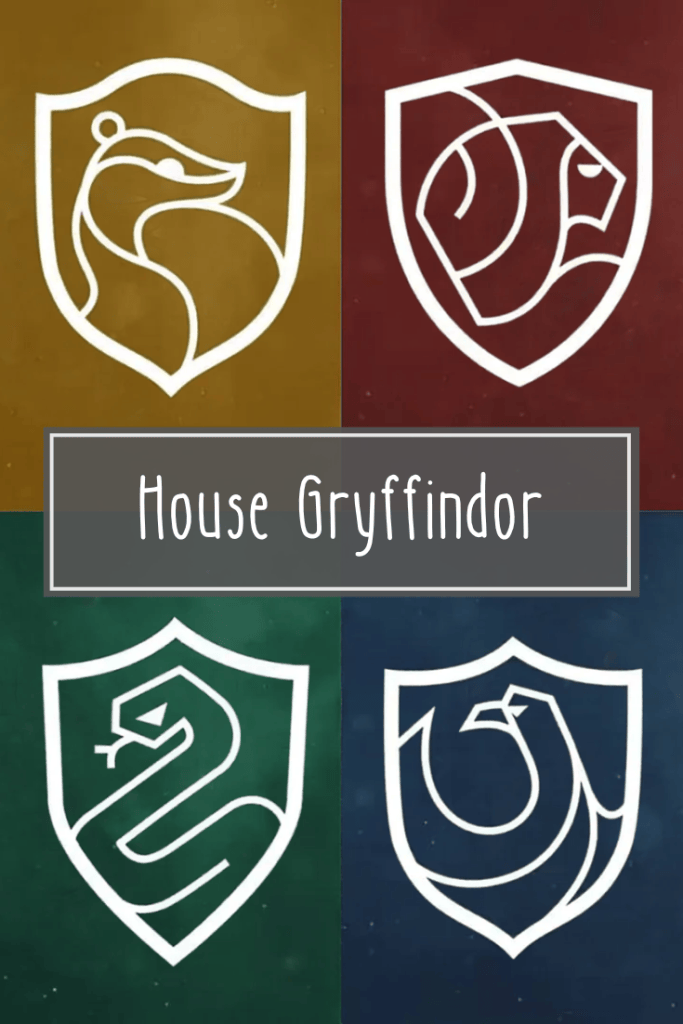
Every year, each Hogwarts first-year is placed into one of the four houses (Gryffindor, Slytherin, Ravenclaw, or Hufflepuff) by the Sorting Hat. The Sorting Hat considers a blend of traits, potential, personality, and even personal preference when deciding a student’s Hogwarts house. It evaluates:
- Character traits and values. The hat was enchanted by all four Hogwarts founders to identify the qualities each house prizes. Gryffindor looks for bravery, nerve, and chivalry; Hufflepuff values loyalty, fairness, and hard work; Ravenclaw seeks intellect, curiosity, and wit; and Slytherin favors ambition, resourcefulness, and cunning. Together, these criteria guide the hat in placing students where their strengths and potential will succeed.
- Legilimency (aka mind-reading). The hat can look into a student’s thoughts, personality, fears, and potential. This insight helps the hat understand where each child is most likely to grow and thrive.
- Personal choice. The hat does take the student’s wishes into account, and students “usually get the House they want.” Harry famously avoided Slytherin by insisting “Not Slytherin,” and Hermione chose Gryffindor despite the hat’s interest in Ravenclaw.
- Potential (not just current behavior). It weighs who a student could become, not only who they appear to be at age eleven. Neville Longbottom is the classic example of latent bravery. He argued against Gryffindor, feeling he wasn’t brave enough and preferred Hufflepuff. The hat disagreed and put him in Gryffindor anyway. This shows the hat will override a student’s wish if it believes strongly that another house is truly the right place.
- Balance of traits. When a student shows strong qualities from multiple houses, the hat may debate internally, sometimes for minutes.
The hat is a symbol of Hogwarts tradition and identity. It embodies the values of all four founders and preserves their philosophies, reminding us that the houses are meant to complement one another. With that foundation in place, let’s talk about Gryffindor.
The Gryffindor Child
You might belong in Gryffindor,
Where dwell the brave at heart,
Their daring, nerve, and chivalry
Set Gryffindors apart… – Harry Potter and the Sorcerer’s Stone
A young witch or wizard is sorted into Gryffindor when they show (or have the potential to grow into) the traits Godric Gryffindor valued most:
- Courage and bravery – the foremost Gryffindor trait; students who act despite fear, stand up for others, or show moral bravery are prime candidates
- Daring and nerve – a willingness to take risks, push boundaries, and leap into action
- Chivalry – a sense of honor, fairness, and protecting the vulnerable; often feel compelled to do what’s right even when it’s hard
- Determination – a strong internal drive and refusal to give up, even when the odds are terrible
It should be noted that these qualities don’t have to show up in big, dramatic ways. I mean, look at Neville Longbottom: anxious, insecure, and clumsy, but just and courageous at heart.
While these traits are wonderful, they’re also the source of many Gryffindor challenges. Their courage, passion, and instinct to act first has a shadow side that can easily tip into behaviors that can be impulsive and difficult to manage:
- Big emotional reactions – meltdowns when something feels “unfair,” even if the issue is small
- Risk-taking – climbing too high, running too fast, trying things before they’re ready
- Arguing passionately – especially about rules, fairness, or sibling dynamics
- Difficulty slowing down – rushing through tasks, interrupting, or leaping into situations
- Leadership turning bossy – trying to direct peers or siblings with too much intensity
- Sensitivity to criticism – pride makes feedback feel personal
Gryffindors are guided by instinct, emotion, and moral clarity. When those are strong and still developing (as in childhood), they can overwhelm the slower skills of planning, patience, and perspective-taking.
Upon rereading the series this year, Patti found that although Harry is “The Chosen One”, very often he makes accusations without considering other factors. He strains and gets exasperated when other adults are trying to calm him down. He always tries to take on a challenge alone, even though he needs Ron and Hermione time and time again.
It might not be a coincidence that in the new audiobook, Harry is actually really whiny.
How to Parent a Gryffindor
A Gryffindor child is bold, big‑hearted, impulsive, justice‑driven, and always ready for action. Parenting them can be awesome, but also a bit exhausting. And while there’s no official wizarding‑world parenting manual, here are a few ways to support these spirited and courageous strong‑willed kids as they grow:
- Lead with love (and emotional safety). Harry’s story repeatedly shows that a child who feels deeply loved becomes more confident, grounded, and brave. This starts with validating their big feelings, creating a home where they can safely fall apart and recover, and praising everyday acts of courage (like telling the truth, apologizing, trying again) so they learn that bravery also lives in small, meaningful choices, not just in heroic moments.
- Tell them “why.” Gryffindor‑leaning kids resist rules that feel arbitrary, so they do best when boundaries are explained in ways that feel fair, logical, and protective of others. When rules are framed around fairness and safety and they’re invited into problem‑solving, they’re more cooperative and confident. What doesn’t work is the authoritarian “because I said so,” which only heightens their resistance, (e.g. Dolores Umbridge)
- Turn bravery into responsibility. Gryffindors flourish on doing, leading, and taking on meaningful risks, so giving them structured outlets for action (Quidditch) helps channel their energy in healthy ways. Offering small leadership roles, chances to advocate respectfully, and opportunities for safe, confidence‑building risks lets them express their natural boldness while learning boundaries and responsibility.
- Teach impulse control but make it fun. Instead of shutting down impulsivity, focus on redirecting it in ways that build self‑control and confidence. You can pause with them and make a quick plan before jumping in, or ask guiding questions like “What’s the brave and smart choice here?” Practicing simple “stop–think–act” routines through playful games, challenges, or timers helps them learn to channel their energy without losing their spark, just like Professor McGonagall.
- Teach them that chivalry and moral courage aren’t dead. Gryffindors care deeply about doing what’s right, and you can reinforce this instinct by highlighting kindness as a form of bravery, praising moments when they stand up for someone, and reading stories with moral dilemmas so you can talk through the choices characters make.
- Let them be. Gryffindors thrive when they’re allowed to be fully themselves. Even their dorm common room is relaxed, kids are studying but also planning pranks and playing hangout music. They feel most confident and courageous when they’re seen, valued, and encouraged to explore their natural strengths. Rather than pushing them into a mold, support them in growing into their own unique expression of bravery.
Parenting a Gryffindor child means nurturing their courage while teaching them wisdom. They’re bold, loving, dramatic, and principled. With the right guidance, those traits become incredible strengths.
*Please note that this post is just for fun and we do not promote or condone the personal views of author J.K. Rowling.
Like this post? Follow Child(ish) Advice on Facebook, Pinterest, Instagram, and TikTok.
Sources:
Rowling, J. K. (1999). Harry Potter and the Sorcerer’s Stone. Scholastic.
Harry Potter | Official home of Harry Potter, Hogwarts Sorting, and the Wizarding World
Gryffindor Traits: Personality, Strengths & Weaknesses


2 thoughts on “House Gryffindor”