
“Charlie, have you ever stood at the edge of a cliff or subway platform with someone, and you thought just for a split second, ‘What if I pushed him?’”
“Well, not really. Usually, I follow the Judeo-Christian ethic of ‘Thou shalt not kill,’ but that’s just me.” (So I Married an Axe Murderer, 1993)
Sometimes we wonder if we’re raising our kids to be good humans. We question if we may have been too harsh or hot-tempered in the moment, and that our actions will leave our kids with permanent emotional scars. We worry that if we don’t get this parenting thing right, our children may become one of those psycho killers in a slasher movie. I recall sobbing to one of my friends that my then 2-year-old son was going to grow up to be a serial killer because I yelled at him one time.
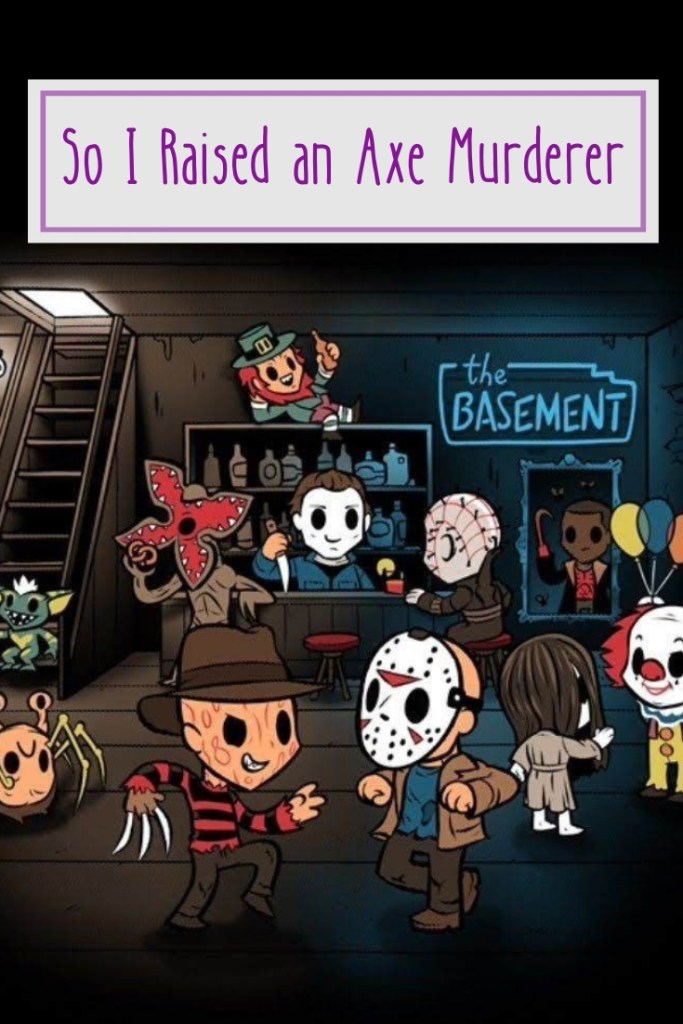
But hold on, the chances of us raising a Jason Voorhees are far less than we imagine. Currently, only 1% of the global population is categorized as psychopathic. Other stats reveal that serial killers make up only 0.0006-0.0012% of the US population. In other words, the probability of raising a calculating, brutal murderer is microscopically slim.
Aggression as the Norm
Recently, my now 6-year-old has been making jokes associated with violence, on top of play fighting and rough-housing with his friends. Although I know it’s all fun and games, I can’t help but cringe or think the worst sometimes. Is he just repeating banter, or is there a bit of sadism in there??
When our kids display aggression, we might think of it as a sign of violent behavior down the line. A recent survey found that 46% of parents with children ages 6 and under reported feeling worried about aggression in their child. But here’s the thing, aggression is part of human development.
It’s not unusual for children to have behavioral outbursts, especially kids who are developing their communication and impulse control. It’s a way to show their displeasure or anger with a person/situation when they can’t find the words or regulate their emotions. Hostility can vary, but can include:
- Glaring
- Posturing
- Yelling or screaming
- Using mean words or foul language
- Spitting
- Throwing objects
- Pushing, hitting, kicking, biting, scratching
As weird as it sounds, at a certain age this is…normal.
Interestingly, aggression emerges around 8-12 months of age as they learn cause-effect. Example, they smack an adult in the face, adult makes a sound. But that behavior starts to diminish as their brain develops and finds appropriate means to express and acquire their wants/needs. Additionally, aggressive play is a form of risky play, helping our kids build and refine their cognitive, emotional, and gross motor skills they’ll need in the future.
Aggression is an effective reaction. It serves an evolutionary purpose to help us obtain resources (like food and water) and protect ourselves if threatened. However, if you check this behavior and course-correct as needed, your kid can learn to manage aggression in a healthy way.
The Makings of a Murderer
Digging back to the roots of horror films, all of these violent slasher movies centered around symbolism. The victims in these movies were generally unalived because they committed a litany of sins: promiscuity, greed, excessive lifestyle, doing dumb teenage stuff and running someone over in a car. The killer is usually an exaggerated symbol of punishment or reckoning, not meant to be an actual person.
Slasher movies are known to have graphic violence and a ridiculously high body count, but let’s not forget that they are fictional. What actually creates a cold-blooded killer? A mix of trauma and genes.
Traumatic upbringings have been found to play a significant role in what makes a murderer; neglect, abandonment, parental abuse, etc. We’re talking actual felony-level human-cruelty emotional and physical abuse trauma. Just a hunch, but I don’t think anyone reading this blog falls into that category.
On the genetic level, researchers in 1993 identified a gene mutation that we know as the “warrior gene” (aka the “serial killer gene”). This mutation predisposes a person to aggressive and violent outbursts by blocking the ability to break down certain neurotransmitters like dopamine. Researchers also found that there is such a thing as a “killer brain.” After collecting and studying a multitude of brain samples from convicted murderers (with or without a mental disorder), they discovered that there is a malfunction in the prefrontal cortex. This area is responsible for controlling our emotions and impulses to appropriately respond to social situations (morals and ethics if you will).
Are genetics something we can control? No.
All You Need is Love
Although we can’t alter genes, we still have the chance to veer our kids away from a life of a movie slasher.
Enter neuroscientist Dr. James Fallon. While conducting research about vulnerability to Alzheimer’s disease, he found that not only did he have a “killer brain”, but the “warrior gene” as well. That’s two for three on the Murderer Bingo Card. But despite Fallon’s predisposed nature to be a crazed psycho killer, he wasn’t. HOW?! He attributes this to a positive, safe, and secure childhood.
A 2016 study supports his claim with their findings on adopted infants. Researchers discovered that callous-unemotional behavior, an inheritable hallmark feature of psychopathy from biological mothers with severe antisocial behaviors, was inhibited by high levels of positive reinforcement at 18 months by the adopted mother.
In this case, nurture is the winner. So, the next time your kid does something questionable, don’t jump to Norman Bates just yet. Ask them about it. Did you accidentally lose your sh*t? Take accountability for it. Does your child feel safe, seen, and validated? Then you’re good.
The moral of the story: Love your kids, raise them in a safe environment, and show them how to be good humans.
Sources:
Mitchell, H., & Aamodt, M. G. (2005). The incidence of child abuse in serial killers. Journal of Police and Criminal Psychology, 20(1), 40–47.
Are Serial Killers Born or Made? | Psychology Today
Cole, S. & Anderson, S. (2016). Family interaction and the development of aggression in adolescents: The experiences of students and administrators.
Labella M.H., & Masten, A.S. (2018, Feb). Family influences the development of aggression and violence. Current Opinion in Psychology, 19:11-16. doi: 10.1016/j.copsyc.2017.03.028
Hyde, L. W., Waller, R., Trentacosta, C. J., Shaw, D. S., Neiderhiser, J. M., Ganiban, J. M., … Leve, L. D. (2016). Heritable and Nonheritable pathways to early callous-unemotional behaviors. American Journal of Psychiatry, 173(9), 903–910.
Waller, R., Dishion, T. J., Shaw, D. S., Gardner, F., Wilson, M. N., & Hyde, L. W. (2016). Does early childhood callous-unemotional behavior uniquely predict behavior problems or callous-unemotional behavior in late childhood? Developmental Psychology, 52(11), 1805–1819.
Serial Killers Childhood Essay: Childhood Trauma Influence to Become a Serial Killer? (2022, Jun 16). Edubirdie. Retrieved October 2, 2023.
Understanding and Treating Aggression in Children | RAMP
Psychopathy_statistics_and_facts.pdf

