
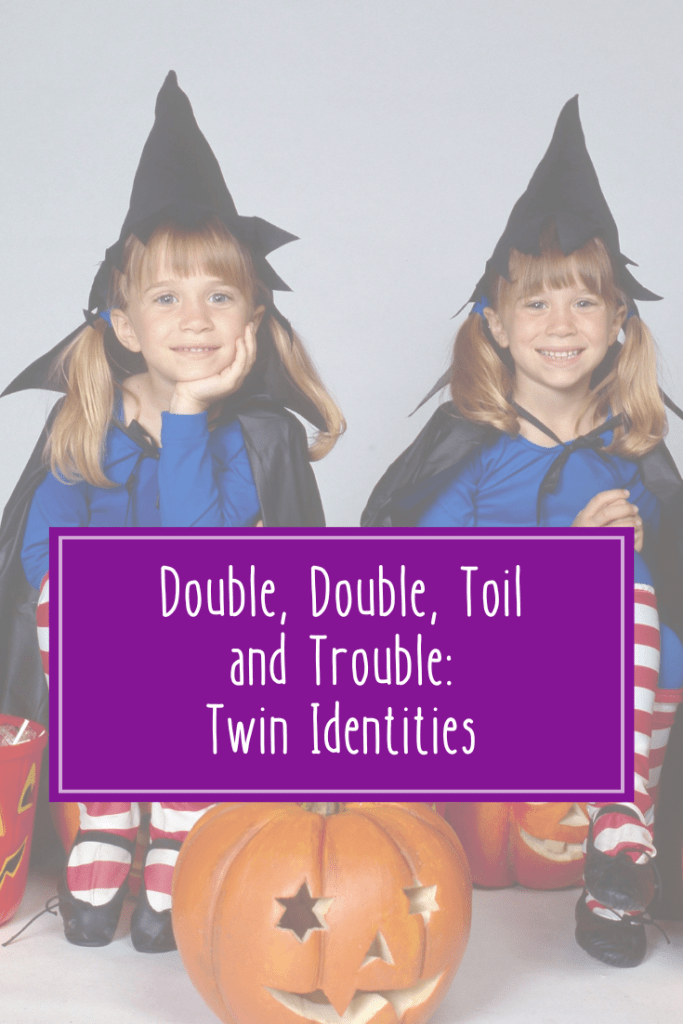
Aunt Agatha: I have Lynn!
Kelly Farmer: I’m Kelly!
Aunt Agatha: Oh, whoever. I have your sister! If you care about her, you’ll give yourself up now!
Twins are often seen as a packaged deal, especially if they are identical. You can’t say Mary-Kate without thinking about Ashley Olsen, or Tia and Tamara Mowry. Even my own twins are known at school simply as “the twins” or “H and K.”
Mix-ups and mistaken identities are common; and while they may seem harmless, these moments subtly shape how twins see themselves and relate to others. That’s why it’s so important for parents to recognize each twin as a unique individual, with their own personality, behavior, and strengths. This isn’t always easy as physical resemblance, emotional closeness, and family dynamic can make individuality harder to nurture. Factor in the reality that they’ve had a constant companion since the womb, and the journey toward individuality becomes even more layered.
Twin Troubles
Twins grow up in a distinct social dynamic. Beyond family, twins navigate early childhood with a same-age companion whose opinions shape choices, preferences, and peer interactions. As they grow, this closeness can stir complex emotions (love, resentment, even loneliness) as each twin works to define who they are beyond the shared identity.
From birth, twins are often treated as a unit. They’re spoken of collectively, expected to share everything, and in some cases will be dressed alike or share the same wardrobe. This can blur boundaries, delay self-identity, and intensify constant comparison. Because of this, many twins report wanting what their twin has. It’s not out of envy, but because having the same thing feels validating. When one twin gets something different (even if it’s a different color or a different character), it could feel like a sign of favoritism, disrupting a sense of equality between the two.
*Our thoughts are with those parents who have to frequently explain that gifts either need to be exactly the same, or have to match a preferred color, or has to be one gift that is shareable.
In interviews, twins often describe feeling self-conscious or introverted, influenced by constant comparison and outside assumptions. For identical twins, physical resemblance adds pressure as others may assume they share the same personality or preferences. This external mirroring can make it harder for twins to feel seen as individuals. Shared environments heighten comparison. Twins often share schools, friends, and routines, making it easy for others to measure them against each other. This can lead to competition, role labeling (“the smart one,” “the funny one”), and clouded identity boundaries. External labels can exaggerate differences and box twins into roles that may not reflect who they truly are.
Another struggle is being mistaken for one another which can reinforce a shared identity and delay personal recognition. (Yes, this primarily applies to identical twins, but fraternal, same-sex twins can still get mixed up.) Many twins express frustration when people expect them to always agree, pointing out that it’s shared experiences that form their similarities (not just being a twin). The idealized image of twins as inseparable or always in sync can discourage healthy conflict and individuality, masking personal struggles and making it harder to support each twin’s unique growth.
True Identities
Just because twins share the same DNA, it doesn’t make them exact copies of one another. Individual identity emerges as each twin navigates their own path, relationships, and sense of self. So what factors can shape identity?
- Epigenetic differences. Environmental influences can alter gene expression, leading to unique traits, preferences, and behaviors, even among identical twins.
- Individual experiences. Different teachers, friends, or hobbies help twins develop different perspectives and emotional responses. The natural competition for attention and praise may also quietly alter their identity and interests.
- Parental support. Self-differentiation can be fostered when caregivers recognize and nurture each twin’s distinct personality. But when sameness is emphasized through matching outfits or rhyming names, it can unintentionally suppress individuality.
- Twin dynamics. Twins often share friends and feel pressure to like the same things. Without thoughtful support, this can spark tension or make it harder for each twin to figure out who they are as individuals.
A 2021 study explored how twins develop their sense of identity compared to non-twins. Researchers found that twins often scored higher in self-differentiation. This means they were better at thinking independently and separating their own emotions from others, despite growing up in a tightly connected relationship. However, twins under the age of 18 were more likely to feel uncertain or confused about who they were (known as identity diffusion). This is a typical part of adolescence, but it appeared more often in younger twins than in their non-twin peers. The study also noted that female twins scored lower in moratorium identity, suggesting they were less likely to actively explore different roles or possibilities during this stage of development.
This research suggests that growing up as a twin can actually help build stronger emotional boundaries and a clearer sense of self over time, even though twins often feel the intensity of identity struggles more acutely during adolescence. So, while the twin experience can make early identity formation more complex, it often lays the groundwork for deeper self-awareness as they get older.
Splitting the Twin Persona
The connection between twins and identity issues is real. Twins need to build a sense of individuality so that they can feel self-worth, self-love, confidence, and independence. As parents, we play a key role in helping twins develop as individuals. While all children need support to be their own person, it’s especially vital for twins because without it, they may struggle with self-confidence or codependency. The goal is to nurture two distinct identities, not just a matching pair. Here are some suggestions on how to do that:
- Say their names. While calling them “the twins” can be rather efficient, they aren’t a single unit. Imagine always being grouped with your partner and being referred to as “the couple” instead of being seen as your own person (weird). Referring to each child by name reinforces their individuality.
- Different kids, different clothes. My twins have their own styles. One lives in jeans and a T-shirt while the other loves to twirl in dresses. Matching outfits might be cute, but once they’re old enough, let them dress in ways that reflect who they are, helping them express their personalities and develop their own taste with confidence.
- Explore separate interests. Encourage each twin to explore various activities and hobbies, even if it’s vastly different from one another. Yes, it may require some strategic scheduling and time management skills (just ask Patti), but supporting individual passions helps build confidence and sense of self. It may also be helpful to have a thoughtful conversation with your twins about how they won’t always want the same things, especially when their opinions differ. Remind them that it’s okay to have their own preferences, interests, and feelings. Respecting those differences is part of growing into confident individuals.
- Schedule one-on-one time. Spend individual time with each twin to strengthen your connection and show that their thoughts and feelings are valued on their own terms.
- Make (personal) space. Twins need their own space to call their own. If possible, give them their own separate bedroom. If not, designate an area that they can organize and decorate however they want.
- Be done with labels. Avoid assigning roles like “the pretty one” or “the serious one”. Those types of labels can limit their growth and fuel unnecessary competition. Let each twin develop their own strengths without pressure to play a part. (*This doesn’t refer to actual labels, like which clothes belong to who. Definitely write names on everything.)
- Let them make their own friends. While twins often share friends, it’s important to help each child build connections beyond the twin bond to foster independence and personal growth. This is where having twins in separate classrooms helps.
- Celebrate individual wins. Recognize each child’s achievements as personal milestones, not comparisons. Applauding their personal successes helps affirm their unique strengths and identities.
Together, these insights highlight a powerful truth: Supporting individuality doesn’t pull twins apart, it brings them closer. Conflict, self-expression, and pursuing different paths are essential ingredients for growth. When each twin is seen and supported as a whole person, their relationship becomes stronger, more respectful, and more enduring.
Like this post? Follow Child(ish) Advice on Facebook, Pinterest, Instagram, and TikTok.
Sources:
Helping Twins Develop Individual Identities and Friendships | Psychology Today
How to Help Your Twins Develop Their Own Unique Identity — TWINS Magazine
Ferguson, R. (2023, October 31). The twin experience: Perspectives on twins’ social and psychological development. Illuminate NRHC.
Amani, M., & Shariatipour, A. (2021). Comparison of self-differentiation and identity statuses in twins and nontwins. Twin Research and Human Genetics, 24(3), 176–183.
 Child(ish) Advice