
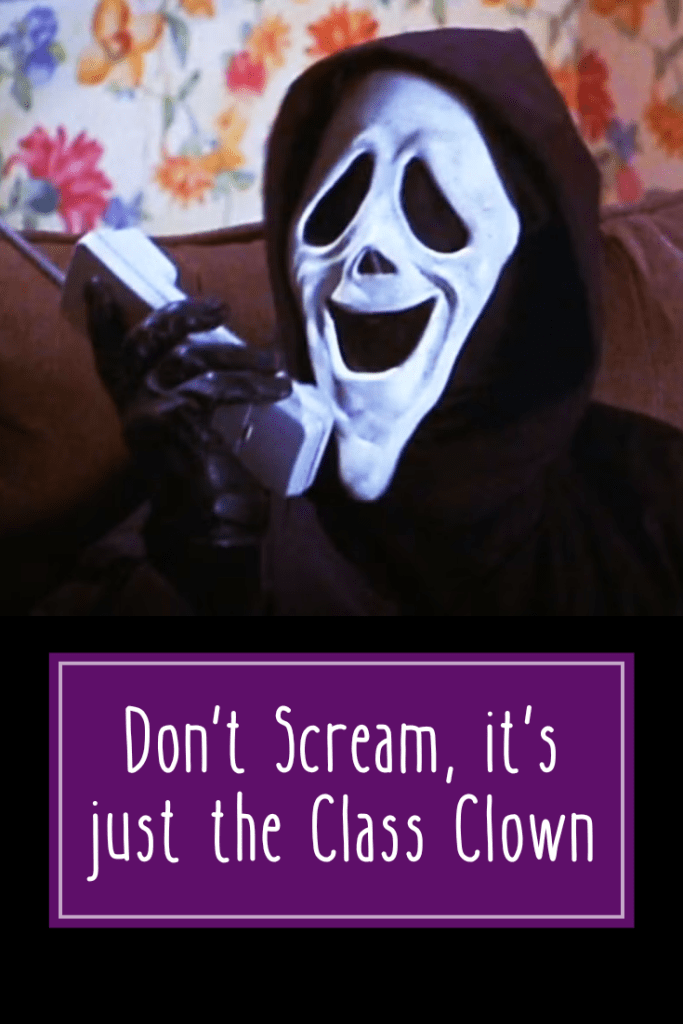
Sidney: Stu, Stu, what’s your motive? Billy’s got one, the police are on their way, what are you gonna tell them?
Stu: “Peer pressure. I’m far too sensitive.”
Oh, Stu Macher. Not only was he part of the very first Ghostface duo, but he’s also the ultimate class clown. Loud, impulsive, and constantly cracking jokes, Stu masks chaos with charisma. But beneath the blood and comic relief lies something eerily familiar: The emotional blueprint of a kid who uses humor to connect, deflect, and survive.
In real classrooms, the class clown isn’t wielding a knife, but a punchline. Quick wit becomes their tool for dodging discomfort, stirring connection, or masking vulnerability. While laughter can connect and relieve tension, it can also disrupt learning, strain relationships, and obscure the academic support that kids need. Class clown behavior isn’t just about being funny. It’s a coping strategy shaped by impulse, identity, and the complex social terrain of school.
“C’mon! It’s Funny!”
Kids can clown around in class in lots of different ways:
- Frequent jokes and sarcasm. Telling jokes, making puns, or using exaggerated voices to interrupt lessons or shift attention.
- Blurting out comments. Speaking out of turn with humorous or off-topic remarks and struggling to wait or follow classroom turn-taking routines.
- Physical comedy or exaggerated gestures. Dramatic movements, mimicry, or playful antics to entertain and grab attention.
Class clown behavior isn’t always a sign of a deeper problem, but it can cause problems. Constant joking can disrupt class, lead to discipline, and hurt grades. Socially, it may attract peers, but it can also push others away who may find the behavior annoying or off-putting.
Kids clown around for many reasons. Positive reactions can reinforce the behavior, especially for those with poor impulse control. Some reasons children may don the class clown persona include:
- Attention-seeking through humor. Using jokes to gain peer approval at the expense of rules or others, intensifying when classmates reward the behavior with laughter.
- Deflection and masking. Dodging questions, criticism, or vulnerability by joking about personal struggles or redirecting serious moments.
- Regulating emotion. For children dealing with stress, trauma, or emotional dysregulation, being the class clown might help them feel more in control.
- Boundary-pushing. Disruptive humor and sarcasm can be a way for kids to test limits, challenge authority, and explore what’s acceptable. This is especially common during developmental transitions like third grade.
- High verbal intelligence or creativity. Some class clowns are genuinely witty and quick-thinking, using humor to express their strengths. This behavior can also signal under-stimulation, often seen in gifted children who feel misunderstood or bored.
- Executive function challenges. Impulsivity, difficulty with inhibition, or poor timing can lead to disruptive humor, even if the intent isn’t malicious.
- Identity and social sensitivity. Kids may label themselves as the “funny one”, making it hard to shift even when it backfires. Many seek laughter and approval but may struggle when jokes miss the mark or boundaries are enforced.
Getting the A in Attention
One group that frequently earns the title of class clown are those with ADHD. Kids with ADHD:
- May blurt out jokes or act out due to impulsivity and poor timing. They often aim to be funny, but unintentionally causing disruption.
- Often seek stimulation, and humor can offer the excitement and dopamine boost they crave. This helps them stay engaged in environments that feel dull or slow.
- Might use humor to cope with frustration, boredom, or rejection by redirecting emotions they struggle to regulate
- Are highly creative, verbally quick, and emotionally intuitive. Their humor may reflect genuine talent but can spiral into disruption without support.
If it’s done at the right time in the right way, this behavior can be a social plus. Peers may genuinely enjoy their quick wit and playful energy. But if the humor is mis-timed or disruptive, it can draw negative attention and unintentionally push potential friends away.
What Do We Do Now?
A 2019 study found that class clown behavior is tied to greater peer popularity. However, it’s also linked to higher aggression and lower levels of prosocial behavior in the classroom, such as helping, sharing, and cooperating. This highlights its complexity, often reflecting a mix of social intelligence, emotional needs, and executive function challenges like impulsivity and dysregulation. With that said, here are some ways to help address the clown in the classroom:
- Dig deeper. Humor may signal a need for attention, stimulation, access, or escape. Rather than correcting, get curious: Are they frustrated by an assignment, need to burn off energy, or need to connect? Ask questions that uncover the emotional purpose behind the behavior, making sure that something more personally complicated isn’t going on.
- Scaffold the laughs. Humor is a strength, but it needs structure and clear boundaries to thrive. Teach your child that jokes have a time and place: silly moments are fine during recess, but focus is needed during lessons. Help your child understand the impact of their actions—jokes can hurt feelings, disrupt learning, or affect focus. Use books, role-play, and reflective questions to explore timing, empathy, and social cues. Teach them to notice non-verbal reactions: Are others amused or annoyed? How can you tell? Provide creative positive outlets like storytelling, drama, or even structured “joke time” at home to showcase their goofiness.
- Reframe and support. For children with ADHD or other neurodivergent profiles, class clown behavior may stem from sensory needs, impulsivity, or creative energy. When we view it as a form of communication rather than misbehavior, our support becomes more effective. Use tools like pause-and-think games or visual reminders and verbal cues help kids pause and consider whether their joke fits the moment. For instance, create a shared non-verbal signal with your child to let them know when their behavior is going too far. Also, add structure to routines and transitions to reduce boredom and overwhelm.
- Talk with teach. Chances are your kid’s teacher is the person giving you this behavior feedback first. Share insights about your child’s humor style and triggers. Discuss and collaborate on respectful redirection strategies (nonverbal cues or private check-ins) that support impulse control and preserve dignity.
Class clown behavior isn’t just about getting laughs or attention. It can be a form of connection, creativity, or even camouflage. With empathy, structure, and support for timing and self-regulation, we help our kids channel their comic energy into something positive and fulfilling.
Like this post? Follow Child(ish) Advice on Facebook, Pinterest, Instagram, and TikTok.
Sources:
Wagner, L. (2019). The social life of class clowns: Class clown behavior is associated with more friends, but also more aggressive behavior in the classroom. Frontiers in Psychology, 10, 604.
Why some kids clown around in class
 Child(ish) Advice