
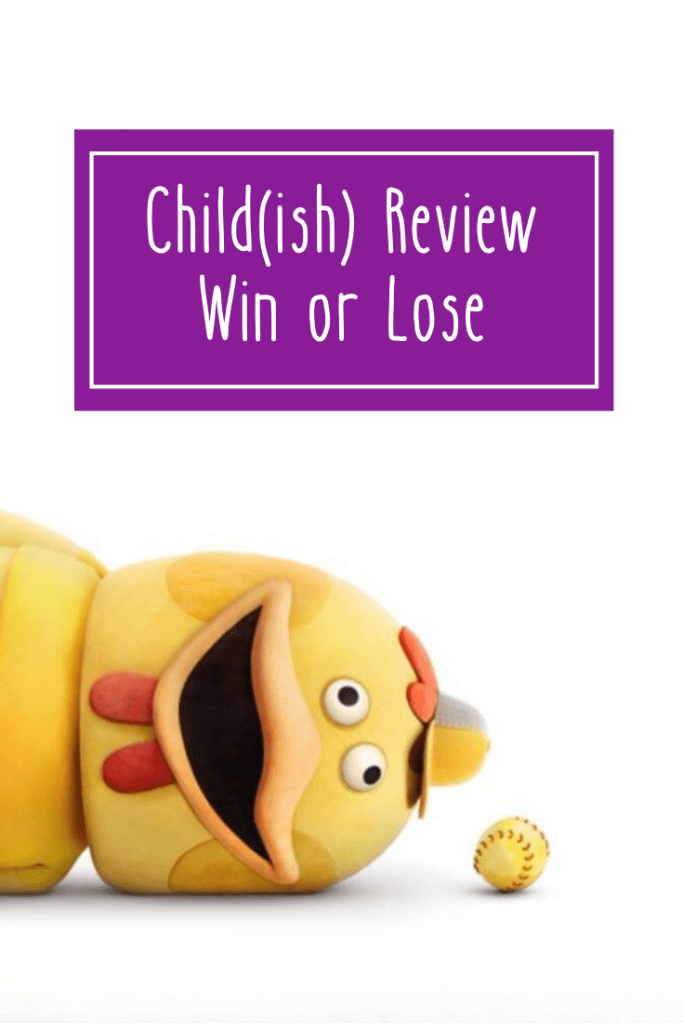
Leave it to Pixar to effortlessly explain complex situations to kids. In the new long-form animated series Win or Lose, their animation team delivers the concept of “Everyone is going through something you have no idea about”.
The show centers around The Pickles, a middle school co-ed softball team in the week leading up to their big championship game. Each episode focuses on an individual character’s point of view and how their personal lives shape their perception of the team, school, and home. Laurie, the coach’s daughter, stresses over how to contribute to the team and make her father proud. Kai, the star player, pushes herself to the limits to avoid her dad’s criticism. Rochelle does whatever to make money so she can play next season. The series explores how different characters grapple with pressure and insecurity – whether it’s to seek approval, perfection, or stability.
Mary’s Take
What I enjoyed about the show was how it highlighted the different ways a single moment could be perceived, like an outfield catch. Laurie missed it, and from her viewpoint, Kai was a hero, dramatically leaping over her to make the play in slow motion. But through Rochelle’s eyes, it was just another routine play, as she called for Kai to throw home for a double play.
The show further explores dual perspectives through the dynamic between Rochelle and her mother, Vanessa. Rochelle views her mom as irresponsible, almost childlike, and struggles to trust her with financial decisions. This leads Rochelle to make a few questionable choices herself.
Meanwhile, Vanessa is simply doing her best to keep the household afloat and be a loving parent, often turning to social media as her outlet and support system. Convinced she’s guiding Rochelle on the right path, #coolmom Vanessa trusts that her daughter would never break that bond. But when she uncovers Rochelle’s secretive actions, the illusion shatters. Watching these two episodes back-to-back sparked a good family conversation about trust, perception, and how personal struggles can shape someone’s choices.
Another discussion that came up was about Ira’s storyline. Ira is a sideline sibling who runs around the ballpark while his sister, Taylor, is on the field. While he preoccupies himself with his imagination, he gets entangled with the Bleacher Creatures, a trio of teenage delinquents who attempt to steal from the ballpark’s snack shack. As the episode unfolds, Ira starts seeing them as friends, choosing to overlook their dishonest behavior even though he knows it’s wrong. This moment sparked dialogue about intention, influence, and what truly defines friendship.
I really enjoyed this series and how carefully crafted each episode was to tell a full story about the Pickles and their championship game. I loved how each character had an animated motif to show their perspective, whether it was a 2D cartoon, blue armor, a cloud of hearts, or sidekick named Sweaty.
As for my kids, they said the following:
- “I relate to Yuwen the most because he tries to make everyone laugh. I don’t think he means to be mean though. He doesn’t want to hurt either.” Referring to the episode, Mixed Signals
- “The soda kid (Odo) is funny. He’s EVERYWHERE!”
- “I don’t want to be a bleacher creature.” Referring to the episode, Steal
- “I like the last episode (Home) because all the stories come together.”
- “FRANCIS!” Referring to the episode, Blue
The kids genuinely enjoy it. In fact, I often catch them replaying episodes during their downtime. Like Bluey or Inside Out 2, Win or Lose is a great source for exploring empathy and understanding different perspectives. While a softball game may seem straightforward on the surface, every player and spectator brings their own emotions, struggles, and personal viewpoint to the moment. It’s a reminder that, even when we don’t know someone’s story, approaching others with curiosity, compassion, and kindness makes all the difference.
Patti’s Take
My girls have a hard time when it comes to character tension, so I knew watching Win or Lose was going to be a challenge and an opportunity to talk. While I don’t mind them watching (and re-watching) episodes of Bluey or Gabby’s Dollhouse, they are getting older and I want to introduce them to content that is more complex and thoughtful.
Because the show also includes the POVs of adults and sibling characters, the main plots branch away from just softball and performance anxiety to loneliness, financial insecurity, being a single parent, divorce, and peer pressure. There are even some sub-plotlines about academic performance, middle school relationships, and comparing yourself to others.
For each episode, we put ourselves in a different character’s shoes. I asked things like a simple “What’s going on in the story”, to “How would you feel in this situation” or “Do you think you would’ve made the same decision”. After a few episodes, you can see how the different canon scenes take on new meaning and nuance.
In the last year, A and Z have had their own run-ins with not being the fastest/strongest/smartest person on the team or in their class. They’ve heard other kids smack-talking or bragging and it doesn’t feel good; and of course, they-don’t-pass-to-me-because-I’m-a-girl. It can be difficult to explain that not everything is black or white. Even the binary concept of having a winner and a loser can be cloudy: sore losers, bragging winners, winning by cheating, or losing through no fault of your own.
Going into the fall and having just registered for a million fall activities, I hope my girls will be able to sit in the uncomfortable/disappointment when they lose a game. Or feel determined to put in the work to improve. Or have the courage to speak up if they’re overwhelmed. The series is extremely relatable, age appropriate, and kids can easily recognize themselves in a number of different characters.
So do The Pickles win the big game? Will they be able to overcome the inner noise and the background drama? And in the end, what are the lessons we will take home?
Watch now on Disney+.
 Child(ish) Advice