
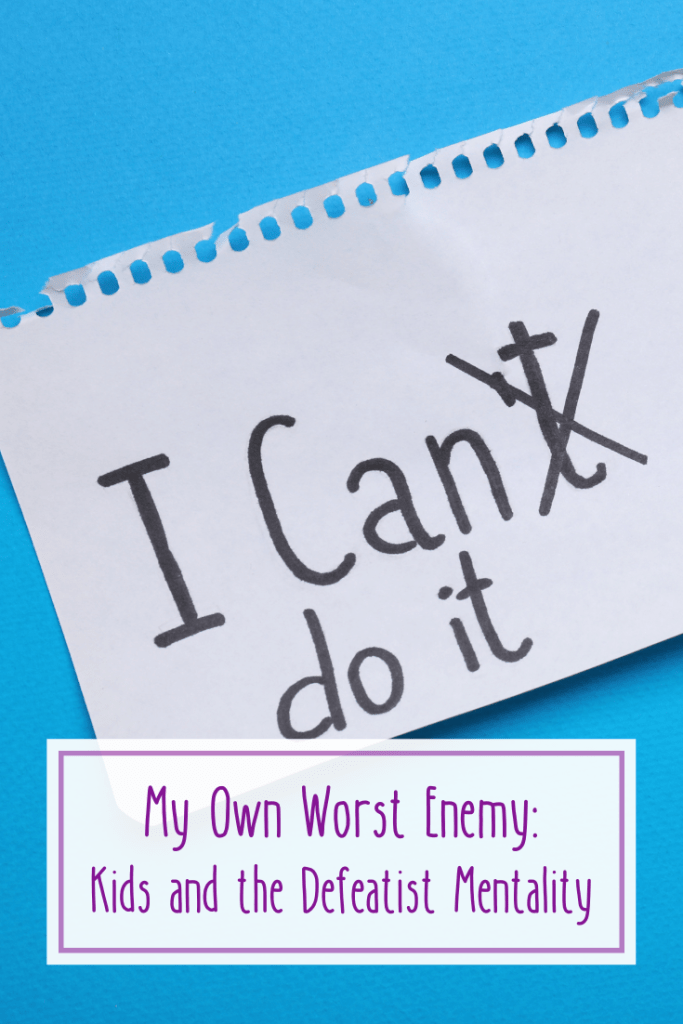
It can be really heart-breaking (and equally frustrating) when we hear our kids say, “I can’t do it. It’s hard. I quit.” Giving kids challenging tasks can make them take a step back and reassess the situation, but what do we do when these thoughts completely influence their mindset and outlook?
Lately, Patti’s 6-year-old Z has been going through these bouts with reading and writing. If she misspells a word or has trouble sounding out a word, she gets heated, stops trying altogether, and then has a meltdown, claiming that everyone is being mean to her. To add a little detail, her sister and friends are slightly ahead of her in these subjects and she feels like she is either left behind or we’re being too hard on her.
From birth, kids quickly learn new skills and gain the confidence to use them. As they get older, that confidence allows them to trust their own capabilities and bounce back if they’re unsuccessful at something. We know resilience builds after facing setbacks. So, it’s tough to see our kids throw in the towel without trying.
A defeatist mindset may look like this:
- Underestimating their strengths and talents
- Overly critical of themselves and somewhat of a perfectionist
- Expecting the worst in a situation
- Gives up, quits, or melts down when frustrated with a task
- Afraid to try new things to avoid failure
- Sees the negative rather than the positives of every situation
The Origin of Defeat
First off, kids aren’t born with a defeatist attitude; it’s learned. So, what leads to a defeatist mindset in children? Here are some common reasons:
- External Pressure. Children may develop an “I can’t” attitude due to expectations that exceed their abilities or conflict with their own interests. Children can sense the unintentional underlying pressures we may impose, causing them to believe that they are not living up to our standards. Despite good intentions, praises like “You’re so smart!” or reassurances like “You can do it!” can add stress. What if I fail this test? Am I still smart? What if I really can’t do it, what will my parents think of me?
- Too Much Help. Kids need to fail to learn from their mistakes, but sometimes we don’t give them the opportunity to do so. We naturally want to help our children succeed and keep them safe. While this may make our life easier, we’re making theirs harder later down the road. Our kids can’t develop mental toughness, flexibility, or confidence if we don’t allow them to figure things out on their own.
- Negative Experiences. A traumatic event may lead your child to avoid similar situations in the future, affecting their ability to address any negative feelings associated with the experience.
- The Want to be Nurtured. Independence means less physical nurturing from parents. Even though they know how to put on their shoes or can endure a stroll through the grocery aisles, the helplessness may be a signal that your child wants more of your time and reassurance that you still love and care about them.
Over time, these factors can lead to:
Low Self-Esteem. Low self-confidence can affect how children handle setbacks. Research shows that after failure, people with high self-esteem focus on their strengths to maintain a positive self-view, while those with low self-esteem become more aware of their weaknesses. (Calling all Daria fans….)
Negative Core Beliefs. Core beliefs are what we believe about ourselves, others, and the world around us (think Riley’s thoughts about herself from Inside Out 2). These thoughts subconsciously influence our behavior. So, if our kids think they can’t do something, they’ll start looking for evidence that supports this belief to convince themselves and everyone else why they’re incapable.
All these negative thoughts our kids experience can:
- Make them more prone to failure. Self-talk like “I can’t do this” or “I’m going to fail” can turn into a self-fulfilling prophecy. A 2000 study involving competitive tennis players found that negative self-talk was associated with losing.
- Prevent them from trying new things. Research suggests that those with low self-efficacy (the confidence to achieve a goal) are more likely to avoid challenging situations and give up.
- Make others view them negatively. A 2007 study published in the Journal of Consumer Research found that negative external opinions exert a greater influence than positive ones. These opinions not only change perceptions from positive to negative but also exacerbate existing negative views. If a child sees themselves negatively, others might see them that way too.
Head Games
A “defeatist attitude” isn’t localized to a single spot in the brain but rather arises from complex interactions between various brain regions, particularly those involved in processing emotions, self-esteem, and decision-making.
- Amygdala – This area of the brain frequently plays a role in processing fear and negative emotions. When someone holds a strong defeatist attitude, their amygdala may be especially active due to the fear of failure linked to the situation. Research indicates a significant connection between increased amygdala activity and the presence of negative self-belief and fear of failure.
- Prefrontal cortex – This region is essential for decision-making and executive functioning. Because their prefrontal cortex is still developing, kids may struggle to effectively override negative self-talk and encourage positive actions.
- Hippocampus – Negative experiences stored here can also contribute to a defeatist mindset, as these memories can be readily accessed and influence current perceptions.
- Anterior midcingulate cortex (aMCC) – This area plays a central role in how we engage with challenges and difficult tasks. Studies show that reduced activity in this region is associated with limited motivation, contributing to a defeatist attitude. However, engaging in challenging tasks and overcoming obstacles can stimulate its growth and activity,
Changing Minds
Kids learn through observation, exploration, and experience. With that said, here are some ways to help them conquer that defeatist mentality.
- Model self-confidence. This doesn’t require pretending to be perfect. Instead, demonstrate how you tackle new and challenging tasks effectively. Share the emotions you’re experiencing, such as stress and anxiety, and explain how you manage those feelings while completing the tasks. In Z’s case, Patti told her a story about how she had a bad first intro to Cursive.
- Embrace failure gracefully. Confident individuals accept failure as part of the journey to success. Show your child that everyone makes mistakes and emphasize the importance of learning from them, rather than dwelling on them, to improve and grow.
- Out of the ordinary. Providing opportunities for your child to try new things allows them to develop and diversify their skills, boosting their confidence and comfortability with novel tasks and activities This could be a step up from what they know (from taking a ballet class to jazz), or something completely different and unfamiliar (like climbing a rock wall or cooking). Z’s teacher recommended that she start a diary, where she can practice writing and putting sentences together on her own.
- Allow for failure. This helps them understand that their mistakes are not the end of the world, and they can recover and try again. Reassure them that your support and love are unwavering, regardless of any missteps. Z always has an eraser and can always start over.
- Praise perseverance. While positive praises like, “You’re so smart” may contribute to a defeatist mentality, acknowledging and applauding their efforts and hard work towards their goal don’t. Over time, Patti points out that Z is reading more fluidly than before and using more great vocab in her classwork.
- Establish goals. Clearly defining and achieving goals, whether big or small, can enhance your child’s self-efficacy. If a task seems challenging, make it a goal for your child to conquer. Assist them in creating a strategy for success by breaking the task into manageable, realistic steps. Can Z read an entire Level 1 book on her own? A Level 2? Do we set aside SSR time (silent sustained reading) at home?
- Change the lingo. Aside from altering negative talk into affirmative phrases, try the “but” twist. So if they say, “I can’t do it”, teach them to add a “but” at the end of the thought and provide a reason for doing the task anyway. For instance, “I can’t do it, but I won’t know unless I really try” or “I hate this so much, but at least it will be done so I can play my video games.” In this case, done is better than perfect.
- Alter perspectives. Incorporate phrases that counter your kid’s negative thinking. For instance, statements like, “Tomorrow is a new day” or “If at first you don’t succeed, dust yourself off and try again” can help them shift their thoughts to a positive one.
- Open communication. Sometimes our kids just need our full attention and empathy when they are feeling defeated. Give them time to self-regulate, be in a safe space, and ask them how they want to handle it.
In the end, changing a defeatist mindset is about accepting where they are at, acknowledging their feelings and struggles, and being the support and guidance they need to become successful.
Follow Child(ish) Advice on Facebook, Pinterest, Instagram, and TikTok.
Sources:
When Children “Can’t Do It,” How to Help – Janet Lansbury
Is your defeatist attitude keeping you down? Here’s how to stop self defeating thoughts
Van Raalte, J. L., Cornelius, A. E., Brewer, B. W., & Hatten, S. J. (2000). The Antecedents and Consequences of Self-Talk in Competitive Tennis. Journal of Sport and Exercise Psychology, 22(4), 345–356. https://doi.org/10.1123/jsep.22.4.345
How to Raise Confident Kids: Tips & Techniques | Child Mind Institute
 Child(ish) Advice
One thought on “My Own Worst Enemy: Kids and The Defeatist Mentality”