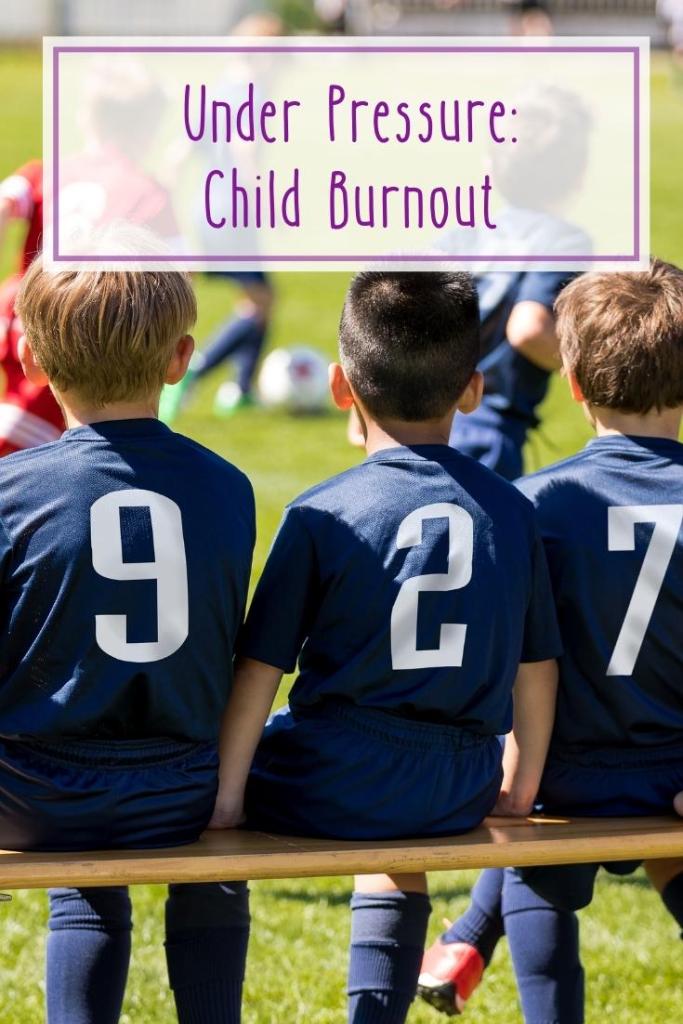
Under Pressure: Child Burnout

Our kids can only handle so much.

As parents, we want to give as many opportunities as possible to succeed. We place them in structured activities, enroll them in after school classes and extracurriculars, and take them to new places to gain new experiences. Despite our good intentions, we can go overboard and itโ€™s only a matter of time until our kids finally reach a breaking point.

Similar to adults having burnout, child burnout is the product of continuous, unmanaged stress. They may be overscheduled with too many activities and not enough rest in between. Or they just might be overloaded from people, directions, and physical exertion. Burnout affects their ability to process and reflect on their day, that then snowballs into anxiety and overwhelm. Their motivation and interest in even their favorite things can drop.

Continue reading

This is Your Kid’s Brain on Tech

Truth: Raising kids today is infinitely harder than in years past. And even though our parents want to give us tips on how to parent, they really have no idea what itโ€™s like with this level of tech immersion. In fact, our kids (known as gen Alpha) will be the first generation to only know a world dominated by digital.

The result: Tech now leaves a completely different footprint on the developing kidsโ€™ brain, making focus, learning, and self-regulation harder to achieve.

Continue reading

Actions are Louder Than Words: The Speech and Movement Connection

Talking doesnโ€™t start at the mouth. Before we can speak or give meaning to language, we must learn to move.

Movement is necessary to explore our surroundings and travel from point A to point B (even if it is just to the couch). Motor development relies on the teamwork of the tactile (touch), proprioceptive (body awareness), and vestibular (movement) systems to establish a physical awareness of self to feel safe and move without fear.

Research has shown that achieving motor milestones may also be closely linked to unlocking cognitive abilities, like speech and language.

Continue reading

Making Sense About Speech: Sensory Integration and Speech

Speech and language are not easy skills to achieve. Before we can talk or make sense of what people are saying, our sensory foundations must be established. This explains why most kids arenโ€™t fully conversational until around 3 years old.

For example, intelligible speech canโ€™t happen without the cooperation of the vestibular (movement), proprioceptive (body awareness), and tactile (touch) systems who govern the fine motor movements, coordination, and motor planning of the throat, lips, and jaw. If we are to understand a conversation, our auditory (hearing) system needs to differentiate between sounds of words to not mix up what someone is communicating to us.

This all ties back to sensory integration.

Continue reading

Course Notes: The Auditory System

Hey, are you listening to me? Did you hear what I said? What did I say?

Sound familiar? As parents, we want to believe our kids are paying attention to the things we say. Sometimes they do, but other times it feels like it goes through one ear and out the other. Although we have talked in depth how attention can play a role in why your child may not be listening to instruction, another thing to consider is that the system frequently used could often be abused.

What is the Auditory System?

This system is responsible for our ability to hear and make sense of the sounds around us. Hearing is a basic skill and one of the first to develop in the womb, working in tandem with the vestibular system to assist in movement, balance, and coordination.

Continue reading