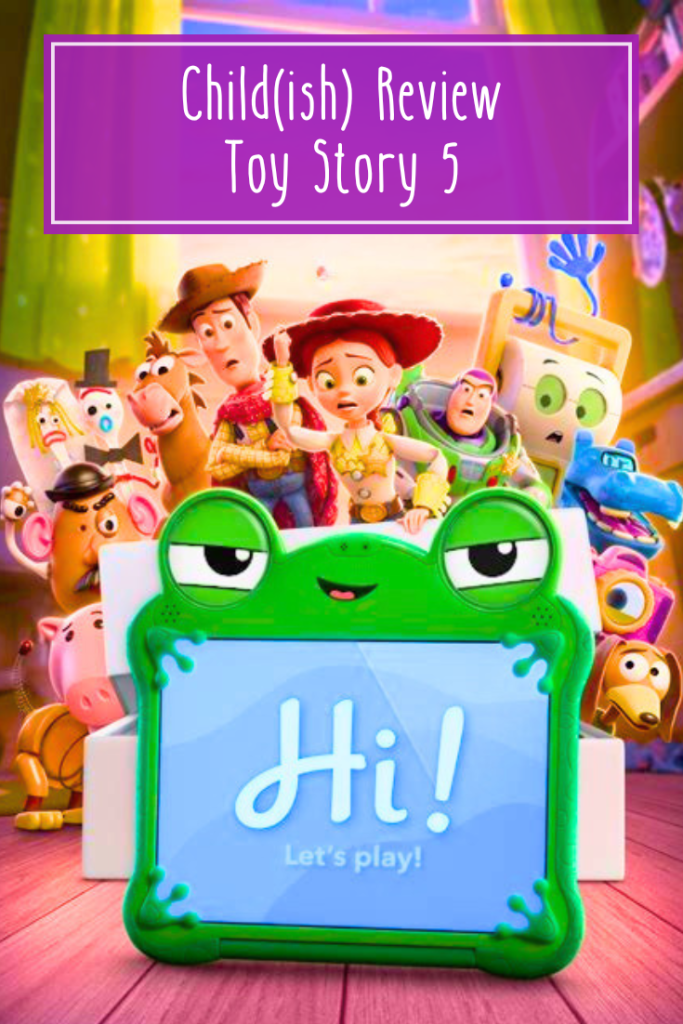
Child(ish) Review: Toy Story 5

I’ll be honest, I never really got into the Toy Story franchise. I know Woody, Buzz, and Jessie are beloved icons, but I just wasn’t into sitting down and watching the movies when they came out, and even now as a parent. So when Patti told me Toy Story 5 was coming out and I casually mentioned that I was indifferent, the gasp she let out was audible. For reference, the first Toy Story came out when we were 10.

But then the Toy Story 5 trailer dropped, Lilypad appeared on screen, and suddenly I was fully invested. In this installment, Bonnie is introduced to a new high‑tech tablet which completely disrupts the balance of playtime, forcing Jessie, Bullseye, Buzz, Woody and the rest of the gang to confront what it means to matter to a child in a digital age.

Toy Story 5 is essentially a child‑development case study wrapped in a Pixar movie. The film directly tackles themes that map onto core developmental domains: social-emotional growth, imaginative play, peer relationships, technology use, and the psychological experience of being “enough.”

Continue reading
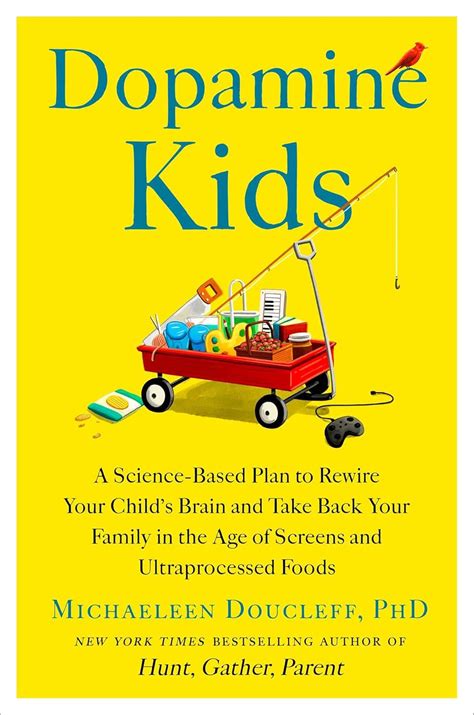
Child(ish) Reads: Dopamine Kids, Pt. 2

In part 1 of my Dopamine Kids review, I said that Michaeleen Doucleff’s five-step plan is very easy to implement. She walks through each step and gradually builds the plan with each chapter. Just like a textbook, you read the material in the first section and do the direct application right after.

So for part 2, I’m sharing my family plan and how I’ve adapted the steps for A&Z.

Continue reading

Child(ish) Reads: Dopamine Kids, Pt. 1

I was very excited to receive my pre-ordered audiobook of Dopamine Kids by Michaeleen Doucleff. Yes, the same Michaeleen Doucleff from Hunt, Gather, Parent. It has been 5 years since I reviewed that book, and I love how Dopamine Kids fits in so perfectly with all of our Brain-Body posts this month.

Dopamine Kids: A Science-Based Plan to Rewire Your Child’s Brain and Take Back Your Family in the Age of Screens and Ultraprocessed Foods by Michaeleen Doucleff.

Blurb: For the first time in history, we are inundated with “dopamine surges” inside our brains, pulling us to technology and ultraprocessed foods like magnets—every day, many times a day. Over the past decade, neuroscientists have finally begun to figure out how these surges alter our choices, our habits, and even our moods. We’ve learned how dopamine can drive adults and kids to engage in activities that we don’t actually enjoy—activities that can make us feel sad, lonely, anxious, and depressed.

Continue reading

The OT in Video Gaming

I’m just going to come out and say it: Gaming has gotten a bad rap.

Despite its associations with a sedentary lifestyle or as a catalyst for violence and aggression, new research has found that there’s much more to gaming and these negative connotations have no real proof.

That’s a good thing as gaming has evolved with our lifestyle and in its own medium. It is literally at our fingertips whenever we’re bored or want a quick escape from our daily life. And even if we don’t engage in video games, our kids definitely know about them; from YouTube videos and Twitch to classmates talking about it in school. In other words, gaming culture is here to stay and we’re here for it.

Continue reading

Things I Learned on TikTok

Very apropos considering Tuesday’s Netflix post and that TikTok might be getting banned. Maybe not so apropos considering one of my Resolutions is cutting screen time…

There are so many parenting influencers (we do consider ourselves one), and all of those accounts, commentaries and opinions contribute to a lot of parenting noise. What may have started as a mindless scroll to turn your brain off, might end up with you questioning your parenting choices, feeling like you have to buy every product under the sun, or leave you genuinely scared for this generation.

And it doesn’t stop at parenting noise. Similar to spending hours on a video game or bingeing on the couch, once you stop, you’re like “Where did my life go?”. You end up dysregulated, feeling lazy, and asking yourself “Did I really need to watch 20 minutes of wild Karen encounters?”

In my infinite scrolling last fall, an ad showed up about turning your screen time into microlearning. Of course, I’m not going to pay for whatever app or course they are trying to promote, but it did make me reconsider the types of content I’ve been consuming.

Continue reading