Skin Deep: Skinโ€™s Role in Child Development

Touch is a childโ€™s first language. Studies show that early tactile experiences shape attachment, regulation, and the development of motor and sensory systems. It helps build our body schema for crying out loud.

All of this begins with the skin: the bodyโ€™s largest organ, the first sensory system to mature, and the primary gateway through which infants learn about safety, connection, and their place in the world. Because the skin is a direct extension of the developing nervous system, it plays a central role in how children build body awareness, emotional stability, and early relationships.

Continue reading

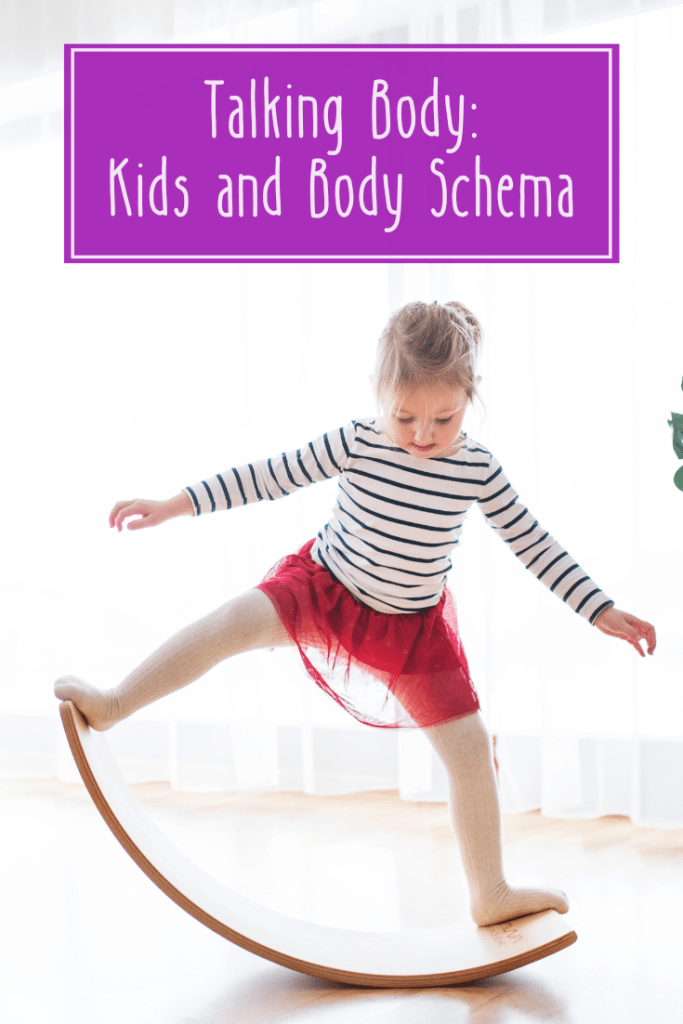
Talking Body: Kids and Body Schema

Kids have an enormous amount to learn, but before they can take on reading, writing, math, social skills, or even coordinated movement, they need a basic sense of themselves.

As children develop, it takes years for them to truly understand themselvesโ€”the โ€œme I feel inside,โ€ the โ€œme others see,โ€ and the โ€œme Iโ€™m becoming.โ€ That long process begins much earlier than most people realize. It starts when the brain first learns the physical boundaries of the body.

Those early signals (movement, balance, joint and muscle feedback, and deep pressure) are the โ€œme sensations.โ€ They give the brain its first clues about where the body begins and ends. Over time, these sensations fill in the brainโ€™s internal โ€œmap of me,โ€ the foundation for later selfโ€‘awareness, confidence, and coordinated movement.

Continue reading

Coffee Chat: A&Z’s First Visit to the Podiatrist

I do not have flat feet. If anything, my arch is incredibly high and my friends complained that we couldn’t borrow each others’ shoes because of it. I also tend to underpronate which I didnโ€™t really notice until college. So when Troy and I started dating and he wore orthotics, I totally thought it was an old man thing.

Last month, Troy suggested we take the girls to the podiatrist. I get being overzealous about your kid’s health, but exactly how many pediatric podiatrists are there?

He said that he noticed that Z’s ankles were crumbling in when she walked and that’s a sign of flat feet. A’s feet also were a bit weird; they curved inward. My little pigeon toe! My MIL also worked as an x-ray tech in a podiatrist’s office, and she reconfirmed they definitely needed to go.

I didn’t think this was a big deal, since they were still growing and neither of them seemed fully “in their body” yet. But when I looked at videos of Z walking in flip flops, it was very clear. Similarly, in videos of A running, she looked a bit “floppy” for lack of a better word. To the podiatrist we go!

Continue reading

The Kid Brain on Handwriting

In a world where messaging and voiceโ€‘toโ€‘text are becoming the norm, handwriting can seem outdated; but itโ€™s not, especially for children. Beyond sending a message or jotting down an idea, handwriting supports parts of child development that other modes of written expression simply canโ€™t replace. Even in a digital world, itโ€™s still one of the most efficient ways to build the cognitive, motor, and language systems kids rely on for learning.

Continue reading

Holiday Gift Guide: Preschoolers, Ages 3-5

Between ages 3 and 5, children rapidly grow as curious problem-solvers, expressive communicators, and imaginative players. They build friendships, develop empathy, and gain physical independence. This all lays a strong foundation for school readiness and future learning.

Continue reading