
Course Notes: The Whole-Brain Child Approach, Pt. 1

Every two years, OTs must complete at least 24 hours of continuing education to maintain their licensure. I love this requirement because I can learn new techniques, get a grasp of the new research that is currently out there, and apply it to practice.

My course this month is on the Whole-Brain Child Approach and how we can incorporate it into our pediatric work. I found this course to be super helpful in understanding a child’s maturing brain and why it is so important to connect with them from a place of compassion and kindness. This is something that all parents can practice, not just therapists. Here are some facts and strategies I’ve learned in the first section of the course.

Continue reading
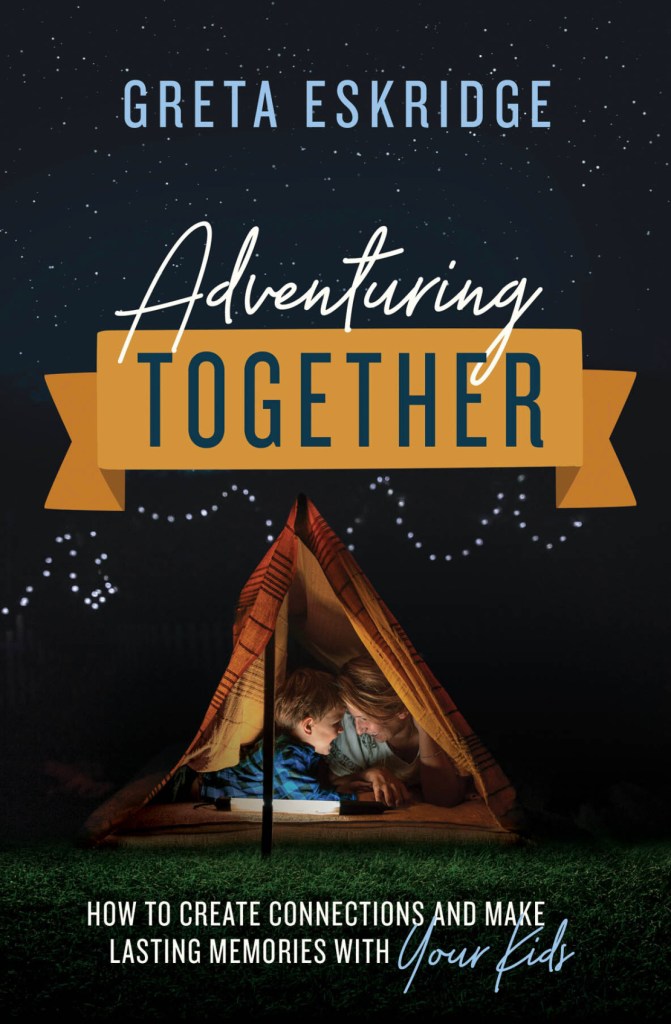

Child(ish) Reads: Adventuring Together

Adventuring Together: How to Create Connections and Make Lasting Memories with Your Kids
By Greta Eskridge
224 pages.
Audiobook is 3 hrs and 54 mins.
This book is published by a Christian publisher; however, the content is not faith specific.
Chapters include personal stories as well as idea lists for kid adventures.

I first learned about Adventuring Together from the Minimalist Moms Podcast. It was three months into COVID and I was trying to rebuild my girls’ summer plans, which now no longer included our public park and splashpad. What could we do to make sure our toddlers weren’t spending the entire summer bored and indoors?

Continue reading

Child(ish) Reads: Unselfie

There are a ton of articles about the major differences between Boomers, Millennials, Gen X and Gen Z; and how social media and screen time have driven huge cultural and sociological shifts. Now that Millennials are becoming parents, we have a very real fear: Fear that our kids could grow up to be really self-centered a**holes.

I think our most recent election is a prime example of how empathy influences our actions, our representatives, and our policies moving forward.

Here are some quick facts:

  1. Empathy means a person can recognize, understand and express their own emotions, as well as be attune to the emotions of others. Not just having touchy-feely feelings.
  2. Girls are more likely to be empathetic because parents talk about feelings more openly with daughters than with sons.
  3. Many people blame social media and screens for creating narcissistic zombie kids, but there is much, much more to the rising empathy gap.

Unselfie: Why Empathetic Kids Succeed in Our All-About-Me World
By Michele Borba, Ed.D.

Instead of giving you a play-by-play review of this great book, I want to talk about the things that stuck with me; the great content that not only will help me raise my daughters for the future, but also can shed light on many adults in the present.

Continue reading

Child(ish) Reads: The Type of Parent I Wanted to Be

If you read our first Childish Reads post on pregnancy books, you know that Bringing Up Bébé is one of my top recommendations for moms. I admit, I am a Francophile and having my daughters be prim and proper is a nice little fantasy. But, I didn’t want to pigeon-hole myself into thinking that one book was going to perfectly change my entire outlook on parenting.

To tip the scales in a different direction, I decided to read two additional and arguably polar opposite parenting titles. What could I take from all three of these books, and what could be chalked up to just parenting clickbait?

For this edition of Childish Reads, I’m giving you my takeaways of:
The Happiest Kids in the World: How Dutch Parents Help Their Kids (and Themselves) by Doing Less by Rina Mae Acosta and Michele Hutchison
Bringing Up Bébé: One American Mother Discovers the Wisdom of French Parenting by Pamela Druckerman
Battle Hymn of the Tiger Mother by Amy Chua

Continue reading

Childish Reads: Planning

I’ve always been a planner. I remember wanting a date planner for homework…in elementary school…to go with my very adult Trapper Keeper. To-do lists, brainstorming, habit tracking: these are all my jams.

So after A&Z came home from the hospital, we used the BabyTracker app to get them on a concrete, fool-proof schedule. After six weeks, when Troy and I both had to go back to work, we had to find a way to adapt our daily schedule to theirs without having things fall through the cracks.

This scenario goes hand-in-hand with the first day of school, new jobs, or any big life change, like virtual schooling in a pandemic, maybe.

How can you best allocate your time without feeling exhausted?
How can you juggle everything without dropping anything?

Continue reading