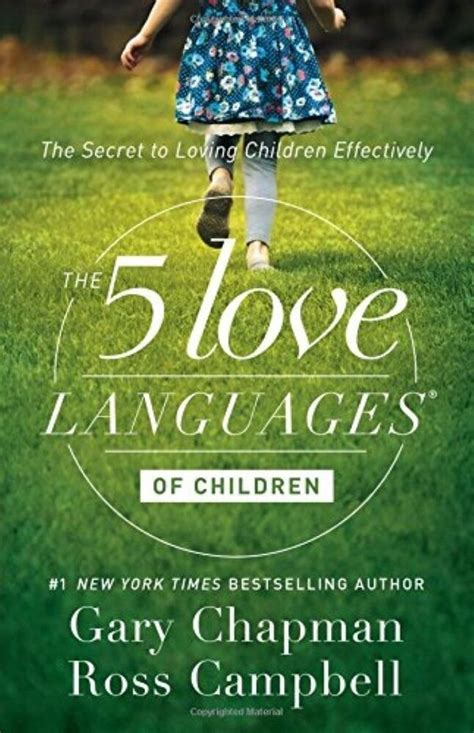
Child(ish) Reads: The 5 Love Languages of Children

I picked this book because The 5 Love Languages have solidly made their way into popular culture. And while you can’t really find out your child’s Myers-Briggs type or Enneagram until much much later, their primary love language does start showing signs early on.

As a parent, I will do anything to understand my kids better. And with most parenting books, I take them with a grain of salt and I can generally pick out an odd pearl or two of wisdom to pass along for my review. For this book, the pearls came from the first 6 chapters, discussing the love languages themselves. Unfortunately, this back half of this book was a bit of a letdown. I rarely say this, but you’re probably fine just reading this review instead of reading the entire book.

Continue reading
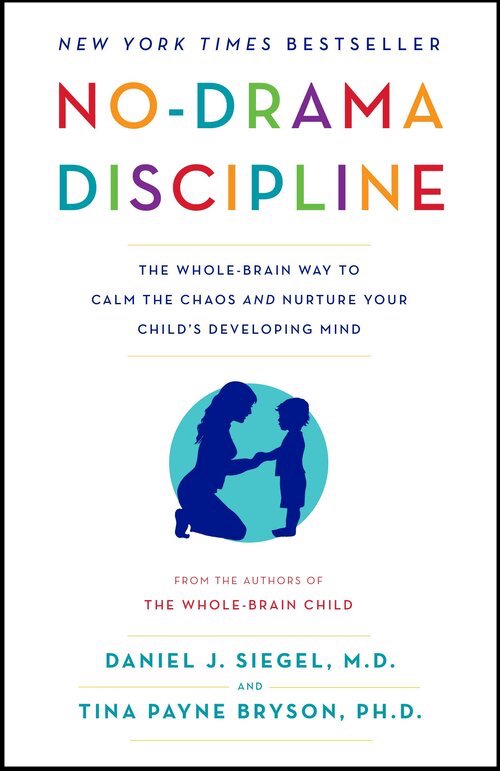
Child(ish) Reads: No-Drama Discipline

While The Whole-Brain Child is definitely an awesome approach to child-rearing, the neurobiology can be a bit of a bear to get through. For No-Drama Discipline, the authors zero in on disciplining with the Whole-Brain approach and the result seems to be much more practical (or at least as practical as neurodevelopment can be).

No-Drama Discipline: The Whole-Brain Way to Calm the Chaos and Nurture Your Child’s Developing Mind
by Daniel J. Siegel and Tina Payne Bryson

Continue reading

Whole-Brain Book Resources

We hope you guys have gotten some useful insight and strategies as we worked our way through The Whole-Brain Approach. The original book, The Whole-Brain Child, was published in 2011 and has been translated into dozens of languages.

Since then, authors Dan Siegel and Tina Payne Bryson have written several books on implementing Whole-Brain principles, as well as new neuroscience-based research on child development and parenting.

Here is a list of other titles you can pick up:

Continue reading

Course Notes: The Whole-Brain Child Approach, Pt. 5

Last week, we covered the following:

  • As our kids begin to acknowledge and address their emotions, they start realizing that situations can be complicated
  • How we, as parents, effect our kids as they make sense of their circumstances
  • Strategies on how to help our children integrate the many pieces of themselves

Home stretch! On to the last 2 strategies.

Continue reading

Course Notes: The Whole-Brain Child Approach, Pt. 4

In Monday’s post, we discussed:

  • How our two types of memory (implicit and explicit) work together to recall an experience
  • What to do if an implicit memory (feelings, behavior, bodily sensations) is disconnected from its explicit memory (recall of an experience), resulting in an emotional flood 
  • Strengthening and integrating these memory pieces through daily practice 

Now that we’re caught up, let’s move to the next three strategies.

Continue reading