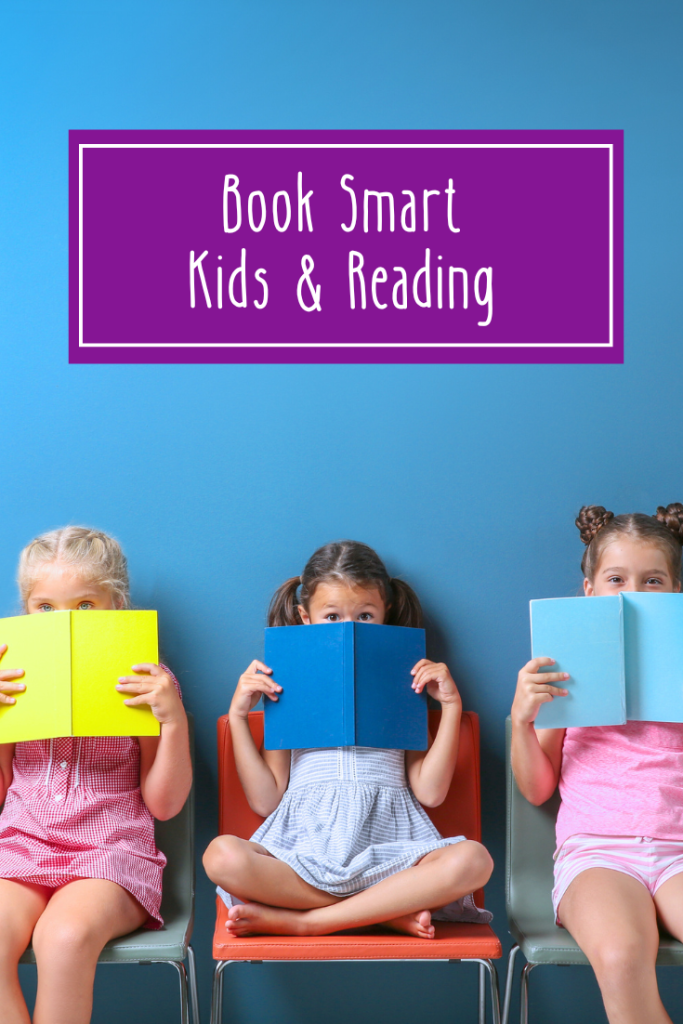
Book Smart: Kids and Reading

A few years ago, we did a Child(ish) Reads on a book called Thirty Million Words by Dana Suskind, M.D.ย  Its core concept is based on the research by Betty Hart and Todd Risley who, in 1995, found that by the age of three, children from higher-income families hear about 30 million more words than those from lower-income families. This disparity plays a substantial role in shaping academic outcomes and long-term success.

This topic has become top of mind this year as our school board is aligning its priorities with Georgiaโ€™s Early Literacy Legislation, which aims to ensure all children become proficient readers by the end of third grade. So why third grade?

Continue reading

I Think We Need a Tutor

Every night, not unusually, Troy and I read to A&Z before bed. We had done a bit of a library purge and made sure that they had a variety of Early Reader and Beginner Chapter books, having already gone through all of our picture books. Now that the girls were older, I wanted to make sure the girls were being challenged by the material, instead of reading the same books over and over.

We switched to reading aloud together and let the girls alternate pages or passages. Thatโ€™s when what used to be an understandable gap turned into one of our kids falling behind.

Continue reading

Child(ish) Reads: The Learning Game

Obviously for #backtoschool, weโ€™re going to review a learning title. I requested The Learning Game from NetGalley earlier this year.

Personally, I may have gotten to a point where parenting books are starting to be redundant. I donโ€™t usually post bad reviews, preferring to just skip over them and share something better. However, I think Iโ€™m due for a little rantโ€ฆ

The Learning Game: Teaching Kids to Think for Themselves, Embrace Challenge, and Love Learning by Ana Lorena Fรกbrega.

Continue reading

A Resilient State of Mind: Dealing with Failure

Part of a childโ€™s job is to learn, and failure is an inevitable part of learning. Failure is also an inevitable part of building resilience. Resilience is the ability to face lifeโ€™s stressors/challenges, learn from mistakes, and recover. Itโ€™s a big cause and effect game happening in your childโ€™s brain.

Our kids fail all the time, especially when communicating what they want or need in the first years of life. As they get older and experiment with boundaries and connect information, they can organize all of that cause and effect and turn it into action. They figure out what works (asking for help) and what doesnโ€™t (throwing a fit), learning and adapting with each new situation.

But somewhere in their early school years, our kids can start viewing failure as a bad thing, limiting their exposure to new experiences, encounters, and achievements. What caused this switch and how can we help our kids embrace failure rather than avoid it?

Continue reading

Your Kidโ€™s Learning Style: Is it Important?

There are a lot of identifiers that give a bit of insight into how people tick. Identifiers like our zodiac sign, what Hogwarts house we belong to, our Myers-Briggs type, and even what learning style best suits us. But when it comes to kids, does knowing their learning preference make a difference?

Recently, my husband and I were discussing how we learn best. My husband absorbs information best auditorily while I find myself to be a visual learner. This talk came as we were trying to figure out what type of learners our kids were, especially when it came to our 4-year-old who was struggling to recall and apply information (like knowing what day it is or when his baseball practices were). ย We were trying to determine the best way he obtains knowledge in order to help him succeed.

Continue reading