Course Notes: The Auditory System

Hey, are you listening to me? Did you hear what I said? What did I say?

Sound familiar? As parents, we want to believe our kids are paying attention to the things we say. Sometimes they do, but other times it feels like it goes through one ear and out the other. Although we have talked in depth how attention can play a role in why your child may not be listening to instruction, another thing to consider is that the system frequently used could often be abused.

What is the Auditory System?

This system is responsible for our ability to hear and make sense of the sounds around us. Hearing is a basic skill and one of the first to develop in the womb, working in tandem with the vestibular system to assist in movement, balance, and coordination.

Continue reading →

child(ish) Q&A: Speech Language Pathology

This spring, when we were planning this series, we wanted to get talking with a couple of our friends. We have mom friends and girlfriends, and we talk about our kids a lot. However, we don’t usually get to have professional conversations about their development. Enter our close friend Sarah, a licensed Speech Language Pathologist (SLP). Gotta love our super-accomplished Millennial Mom circle!

Before we start on our Course Notes series on the Auditory system, we gave her a few basic questions on speech that we were curious about.

Continue reading →

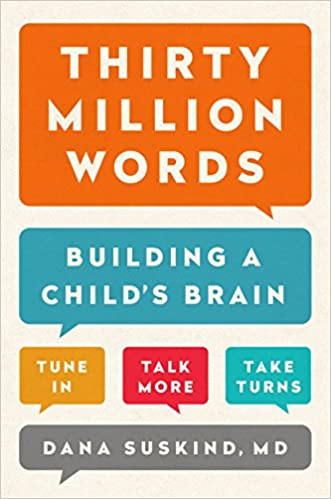
Child(ish) Reads: Thirty Million Words

This book appeared on my radar earlier this year. Author Dana Suskind, M.D. just came out with a new title, Parent Nation: Unlocking Every Child’s Potential, Fulfilling Society’s Promise, and this was one of her previous books listed in her bio. Thirty Million Words was available from my library, so I gave it a try on a work trip in April.

Continue reading →

More Than Meets the Eye: Visual Perception

We are visual beings.

How we assess our environment, learn new skills, or consume entertainment is primarily through our eyes. We rely on our visual system so heavily that many times we don’t need our additional senses (touch, taste, hear or smell our surroundings) to know what’s going on.

So, if our kids overlook important visual details (like putting on a matching pair of socks), or can’t recall what they saw (“Where did you put your backpack?”), or have trouble discriminating between numbers and letters, it can be very concerning to us as parents. About 75% of classroom activities rely on the visual system.

In our throwback post, we learned that visual perception is the total process responsible for receiving and interpreting what we see. It involves visual-receptive (how our eyes move and focus on an object) and visual-cognitive components (how we interpret visual information).

When your child’s visual processing is compromised, we’re quick to assume that they need glasses/contacts or other visual aids. Although that may be the case, other factors can play a role as to why they’re seeing things differently.

Sensory Systems Assemble!: Sensory Processing and Integration

Photo Credit: Marvel

We’re all familiar with the Marvel Cinematic Universe and the Avengers, right? An ensemble of superheroes coming together to stop formidable foes who threaten our world. Well, our sensory systems operate in the same way.

Each sense has their own set of responsibilities but will team up with one another to understand what’s going on around us and how to appropriately respond. This collab is known as sensory integration.

Sensory integration (SI for short, also known as sensory processing) refers to the processing, integration, and organization of sensory information from our body and the environment. This process allows us to participate in day-to-day functions, from self-care to socializing.

Continue reading →