You’re Re-Mark-able! A Super Simple Valentine’s Day Card Activity

You're Re-Mark-able! Valentine Activity

For Valentine’s Day, we send our family members greeting cards since they live far away. Rather than just send them a signed card, we have our son, A, put his personal touch in them with drawings and stickers. They enjoy it as they get to see his pre-writing skills improve as he grows. Try out this super simple activity too with your little ones.

Materials:

  • Valentine’s Day Greeting Cards
  • Markers, crayons, or pens
  • Optional: Stickers or stamps
Continue reading

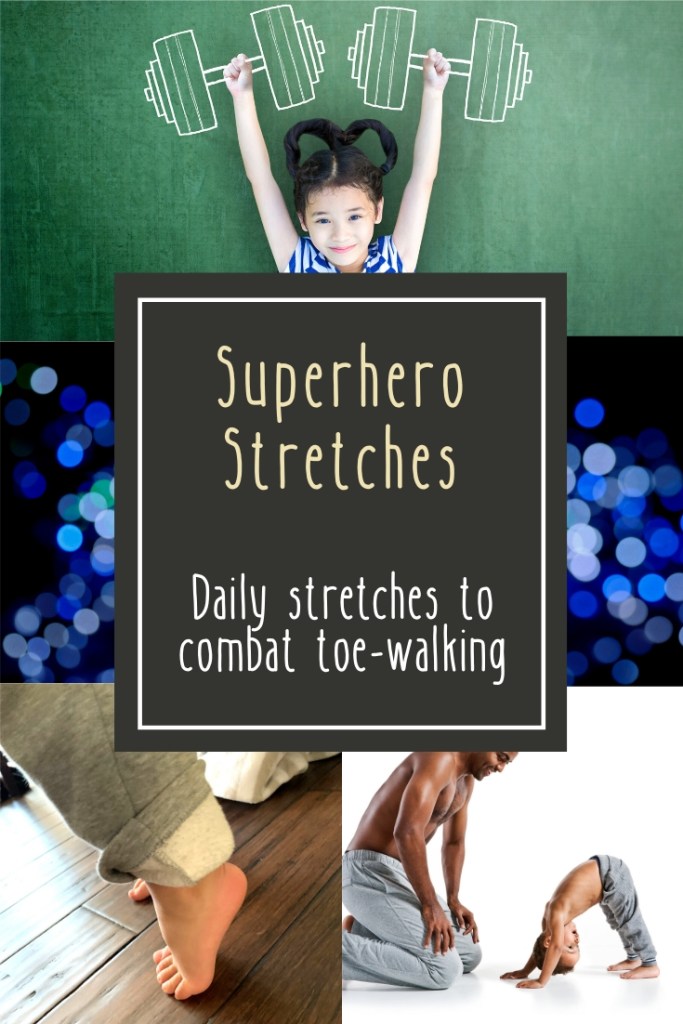
Superhero Stretches: Stretches for the Toe-Walker

The goal for these stretches is to lengthen the lower leg muscles as well as strengthen the front leg muscles. Do these daily. Remember: These stretches should not be painful. 

Continue reading

The Less-Stress Mess

Following up on this week’s Tactile Response post, here is a fun activity to try. This can be done with children of all ages and helpful for those who may have an over-responsive tactile system.  This activity gradually introduces various substances or textures. 

Materials:

  • Ziploc bags
  • A base substance, such as finger paint, shaving cream, or lotion
  • Optional:
    Other small objects to add texture like rice, beans, buttons, or beads
    Food Coloring
    Large Spoon
    Cookie Tray
Continue reading

Anything Goes with Play-Doh®

Anything Goes with Play-Doh

We all know what Play-Doh® is…that yellow container filled with that non-sticky, clay-like dough, ready to be molded into whatever our little hearts desired. What we didn’t recognize was all the benefits we gained when playing with it. 

Aside from letting us create anything our imagination wanted, we were indirectly developing the strength and coordination in our arms, hands, and fingers necessary to complete fine motor tasks. Hmmm…wonder if that was Play-Doh®’s intention?

(Side note: It wasn’t. It was originally sold as a wallpaper cleaner in the 1930s.)

Continue reading

The Importance of Play

The Importance of Play

If I asked you what children do, “play” would be one of the top 3 answers. 
But what is play exactly? It’s more than just a child engaging with toys or running around with other kids. It’s real work.

Play can be defined as “any spontaneous or organized activity that provides enjoyment, entertainment, amusement, or diversion.” It is an occupation that is intrinsically driven by curiosity and exploration to interact within their surroundings. It allows for imagination, the ability to pretend with limited consequences, as well as the opportunity to share and act out ideas other with no judgment. 


Notice that I said play was an occupation. 
Yes, PLAY is an important job that a child does from birth to 12 years of age. 

When a child plays:

  • They understand their own body and how it moves within space 
  • They learn about their environment, objects in relation to each other, and cause and effect
  • They engage their imagination
  • They learn how to build with various objects 
  • They interact with others and participate in games 
Continue reading