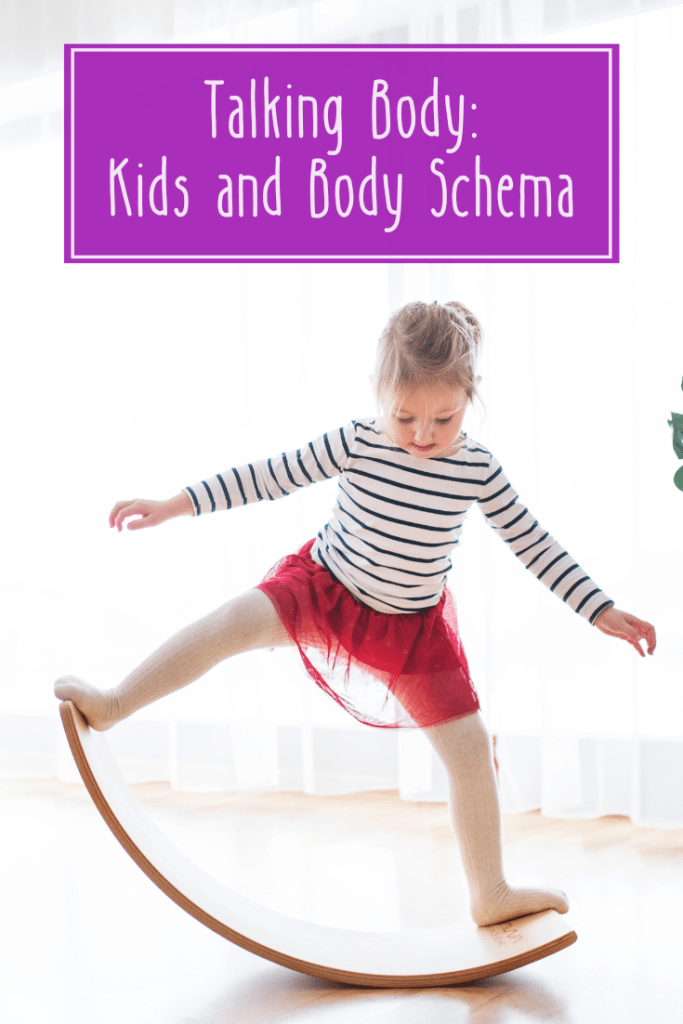
Talking Body: Kids and Body Schema

Kids have an enormous amount to learn, but before they can take on reading, writing, math, social skills, or even coordinated movement, they need a basic sense of themselves.

As children develop, it takes years for them to truly understand themselves—the “me I feel inside,” the “me others see,” and the “me I’m becoming.” That long process begins much earlier than most people realize. It starts when the brain first learns the physical boundaries of the body.

Those early signals (movement, balance, joint and muscle feedback, and deep pressure) are the “me sensations.” They give the brain its first clues about where the body begins and ends. Over time, these sensations fill in the brain’s internal “map of me,” the foundation for later self‑awareness, confidence, and coordinated movement.

Continue reading

Coffee Chat: A&Z’s First Visit to the Podiatrist

I do not have flat feet. If anything, my arch is incredibly high and my friends complained that we couldn’t borrow each others’ shoes because of it. I also tend to underpronate which I didn’t really notice until college. So when Troy and I started dating and he wore orthotics, I totally thought it was an old man thing.

Last month, Troy suggested we take the girls to the podiatrist. I get being overzealous about your kid’s health, but exactly how many pediatric podiatrists are there?

He said that he noticed that Z’s ankles were crumbling in when she walked and that’s a sign of flat feet. A’s feet also were a bit weird; they curved inward. My little pigeon toe! My MIL also worked as an x-ray tech in a podiatrist’s office, and she reconfirmed they definitely needed to go.

I didn’t think this was a big deal, since they were still growing and neither of them seemed fully “in their body” yet. But when I looked at videos of Z walking in flip flops, it was very clear. Similarly, in videos of A running, she looked a bit “floppy” for lack of a better word. To the podiatrist we go!

Continue reading

Kids and the Concept of Love

“I’m in love.”
“No, you’re not. You don’t know what love is. You love cupcakes and ponies.” – Steve Byrne, The Byrne Identity

Kids are funny when it comes to love. Adults see it as a deep emotional connection, but children are still figuring out what that feeling even is. They might say “I love you” to a parent, announce plans to marry a playground friend, or juggle “relationships” with multiple classmates. They hug with their whole bodies and may even offer a kiss simply because they don’t know another way to show affection.

Kids may not fully grasp what love means, but they’re learning how it feels, how to express it, and how to set safe boundaries—and that learning begins from the moment they’re born.

Continue reading

Podcast Playlist: Attention and Learning

So fun fact, it’s very hard to find a podcast episode about kids’ learning and attention without it being centered around kids with ADHD. So instead, I wanted to share some podcasts about alternative ways of learning that help us (and our kids) strengthen our brains and executive functions.

Continue reading

Back in the Day: Attention

No one can escape the stories from older generations about what life was like when they were growing up. They talk about walking miles to get anywhere, playing outside until the sun went down, or buying a soda for a nickel.

And sometimes, those stories come with the reminder that “back then” there was no such thing as ADHD, or food allergies, or emotional trauma, etc. If you’re lucky, they may even suggest that if parents tried a bit harder or used a little more discipline, children these days would be able to sit still and pay attention. Bless their hearts.

The truth is that the kind of attention kids (and adults) need to thrive today is not the same type of attention that was required 30 or 50 years ago. Our society/environment has changed so dramatically that the “old model” of attention (sit still, focus for long stretches, ignore distractions) is only one part of the picture now.

Continue reading