
For our last 2025 Playdate Review, Mary and I headed over to Activate Games. We had brainstormed this venue a few years ago, but our kids were just under the age recommendation. Now that they are 7 and 8, we decided to give it a try and see how they’d fare.
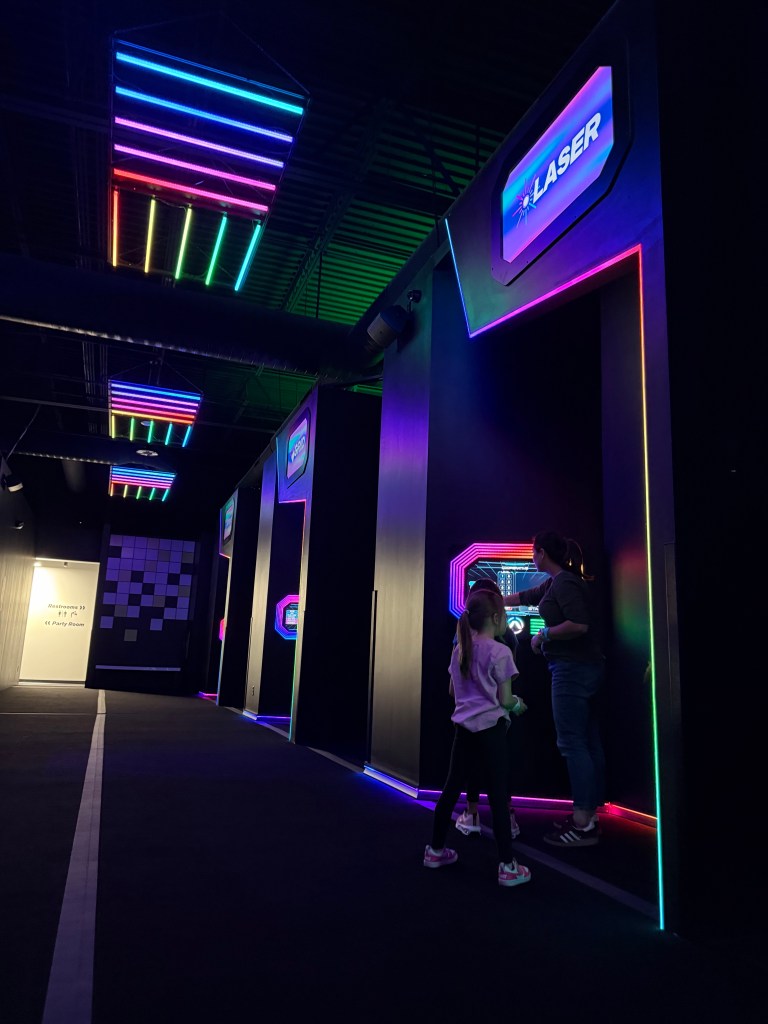
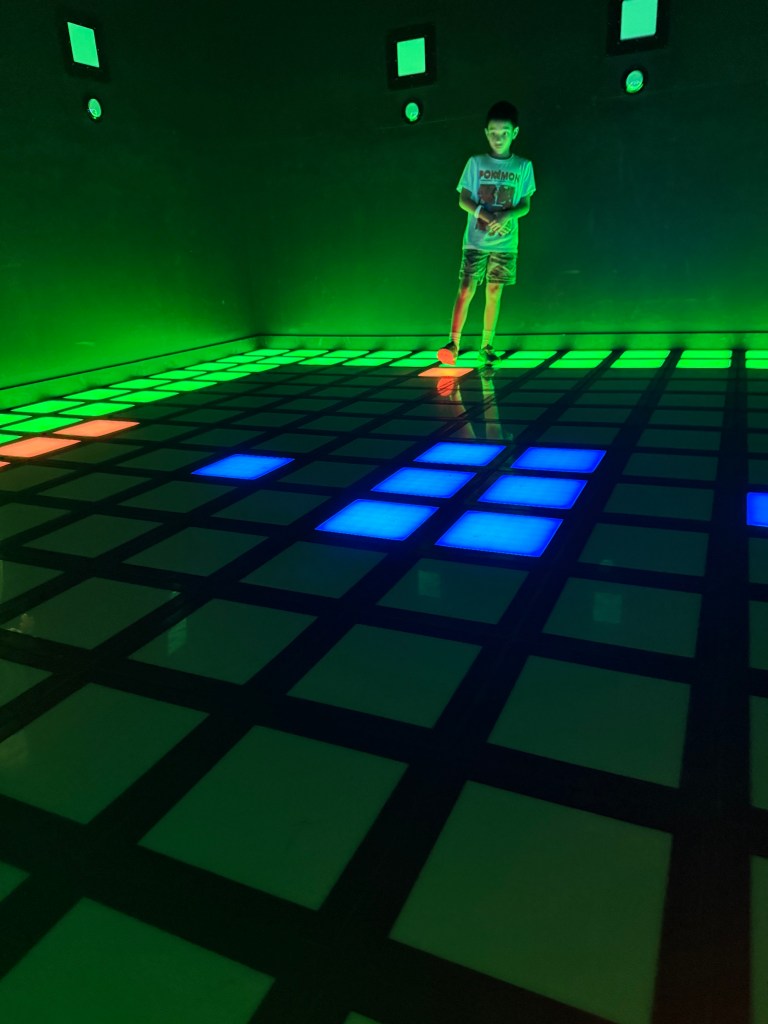
Activate is an indoor, high-tech gaming facility where you and your friends physically step into interactive game rooms that blend technology, puzzles, and movement. It’s like stepping inside Nick Arcade. The environment reacts to your movements in real time. Each themed game room is filled with lights, sensors, and challenges:
- Laser mazes: Duck, dive, and dodge beams to reach the other side.
- Arcade-style basketball hoops: Fast-paced scoring challenges.
- Puzzle rooms: Memory, logic, and teamwork tasks.
- Climbing and agility rooms: Test your speed and coordination.
The kids have all done their fair share of video gaming and interactive gaming with their consoles, VR, laser tag, and Immersive Gamebox. Mary and I have also had a couple adult group outings with immersive gaming. Could we shepherd them into a new gaming world??


The OT Part
Activate utilizes a form of immersive gaming that can be surprisingly beneficial for kids because it blends physical, cognitive, and social skill-building in a fun way that supports developmental growth.
- Physical. Running, climbing, dodging lasers, and balancing build coordination, timing, motor planning, endurance, and core strength. Quick reactions also sharpen agility, all in a fun, non‑competitive setting. It’s also a safe outlet for high‑energy movement, turning excitement into positive, guided play.
- Cognitive. The games engage executive functioning through planning, memory, and strategy adaptation that can carry over into schoolwork. Puzzle rooms and timed challenges foster problem‑solving, encouraging flexible thinking and persistence. At the same time, fast‑paced tasks sharpen attention and focus, training kids to concentrate under pressure and shift their attention quickly.
- Sensory. Lights, sounds, and movement provide controlled sensory input, helping kids practice self-regulation and arousal level. Outside of the rooms, it is kept very dark (think blacklight). So it has a bit of a Vegas effect where you can’t see daylight and have no idea what time it is.
- Emotional. Immersive games help build children’s confidence by giving them a sense of mastery and accomplishment when they overcome challenges. Additionally, the trial‑and‑error nature of gameplay builds resilience, teaching kids to bounce back from mistakes and keep trying with persistence.
- Social. Various games encourage teamwork through communication, turn‑taking, and teamwork. Working side by side on tough tasks turns teammates into friends and groups into tight‑knit crews. If parents get in on the action, they can model teamwork and celebrate the wins together.
But let’s be real. While Activate can be exciting and skill-building, it ain’t all sunshine and rainbows. It’s a human arcade, after all, and it can lead to high energy, heightened emotions, and overstimulation with our kids. These include:
- Age limits. Most games are designed for ages 10+, so younger children may struggle or feel unsuccessful. Sometimes it’s puzzles or rules that are a bit too complex. Sometimes it’s that they aren’t tall enough for basketball hoops or strong enough to push sensors with enough force.
- Overstimulation. Bright lights, loud sounds, and fast-paced movement can be too intense for children who are sensitive to sensory input. This can lead to fatigue, meltdowns, or difficulty self-regulating afterward. Think about button-mashing but with their entire body.
- Physical strain. Participation requires physical activity such as running, climbing, and dodging lasers, which can be fatiguing and carries a small risk of minor injury.
- Competitive pressure. Score tracking and timed challenges may cause stress for kids who find competition hard. If the game moves too quickly, some may check out instead of keeping up with friends. Even if your kid is on a winning streak, the short play time in each room or the frequent errors can be frustrating.
The Parent Part
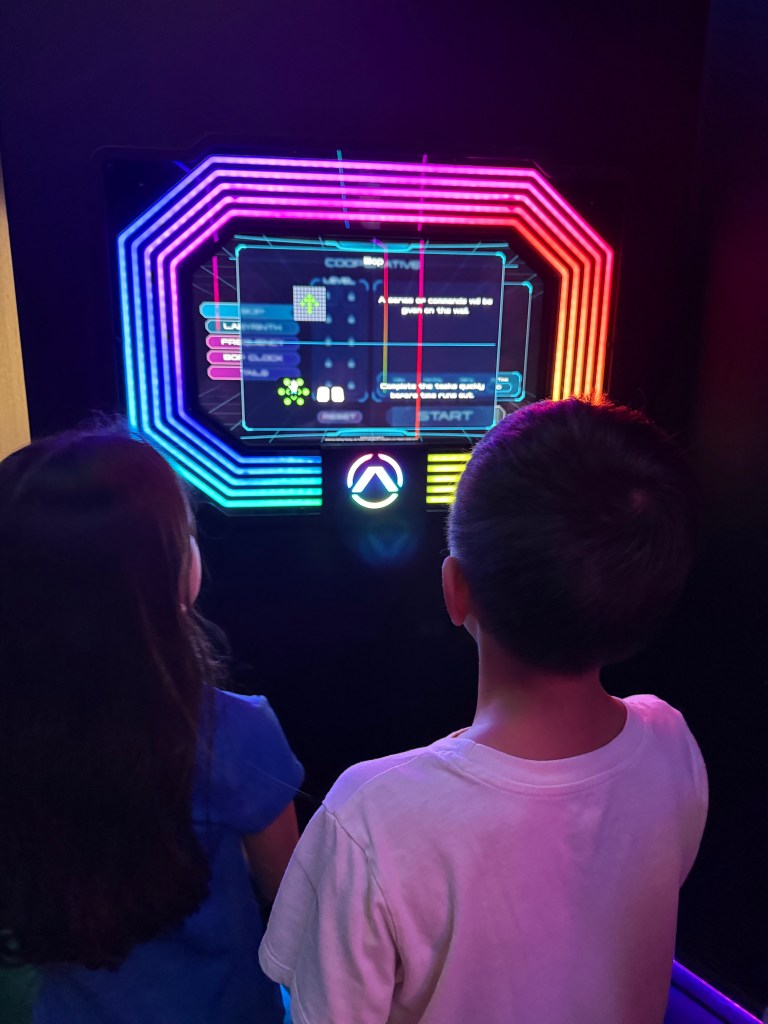
To set up the playdate, I booked five 75-minute tickets on a Saturday afternoon at $25 per person. You do have to sign waivers before entering and everyone is fitted with their own tracking wristband. The bands scan your profile for each game room and track your scores. Mary and I brought our phones but kept everything else in a locker before moving into the rooms.
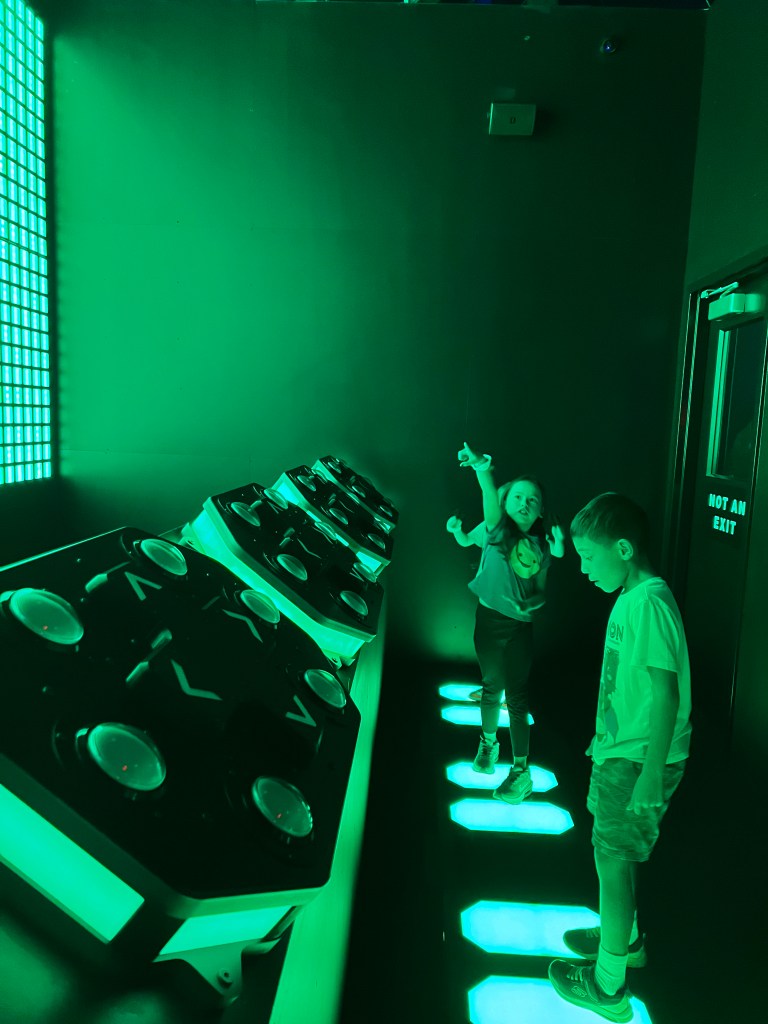
Our location had about 15 game rooms with their own physical setup. Each room had about 4-5 different game variations, each programmable with a 1-10 scale of difficulty. We were advised of two rooms that might be too hard to navigate for smaller kids so we stayed away from those. For the other games, we played at the easiest difficulty setting (level 1) and rarely made it into level 2. FYI, it’s difficult because its FASTER.
After scanning all of our players into a room using the touchscreen (keep in mind some rooms are limited to 5 people at a time), we would play the game. Each room would last about three minutes. Sometimes we would die three times very fast and the game would end. Other times we could proceed to the next level, leave the room, and scan in to play again while another group played. We got that this setup allows for shorter periods waiting for a room, but it also made it difficult to improve a skill set because you’re frequently coming and going.
In every room, we played as a team. So if one kid struck out, it kicked us all out. There are options to play rooms individually, racking up your own points. We would suggest this only if your kids are old enough, tall enough, and independent enough to navigate rooms (and rules) on their own.
The kids enjoyed the experience at first; checking out each of the rooms and how to play each game. But after about 30 minutes, their energy and arousal levels began to climb, edging into dysregulation. They were still having fun but clearly ramped up. By the 45-minute mark, they were hanging on by a thread, trying to hold it together as frustration and emotions started spilling over.
By the end of the game time, they were spent: zoned out, whining, and stressed. It was only after leaving the building and having a little debrief, that they shared they had enjoyed the experience.
To be fair, the environment and game setup are designed to keep players amped up. Each round offers only a five‑second pause before play begins, before jumping into fact-paced, high-intensity games. Lights, sound, and the adrenaline rush push players to jump right back in, keeping them in a constant state of high energy before hopping right into the next room. The space itself doesn’t encourage slowing down—except for quick breaks to grab water or use the bathroom, the only quiet spot with plain white walls where kids can catch their breath. Honestly, we never knew white walls could bring such calm.
Looking back, the experience was fun, but we parents could have managed it better.
For Mary, the environment brought out her competitive nature. She started off as a supportive mom, cheering the kids on, but eventually slipped into the role of a coach, shouting to get the W. Was it effective? Sure. A bit intimidating? Perhaps.
For Patti, it was herding cats. You have three different kids all wanting to do different things, walking off in different directions and talking over each other. There isn’t a lot of active listening, focus, strategy, or situational awareness going on.
Our own dysregulation didn’t exactly make us parents of the year, and we would have benefited from slowing the pace by taking breaks between games, checking our own arousal levels, and instating that the kids rotate picking rooms instead of getting swept up in the chaos. As much as we want to get maximum play for our money, it’s necessary to simmer down.
Things to Consider
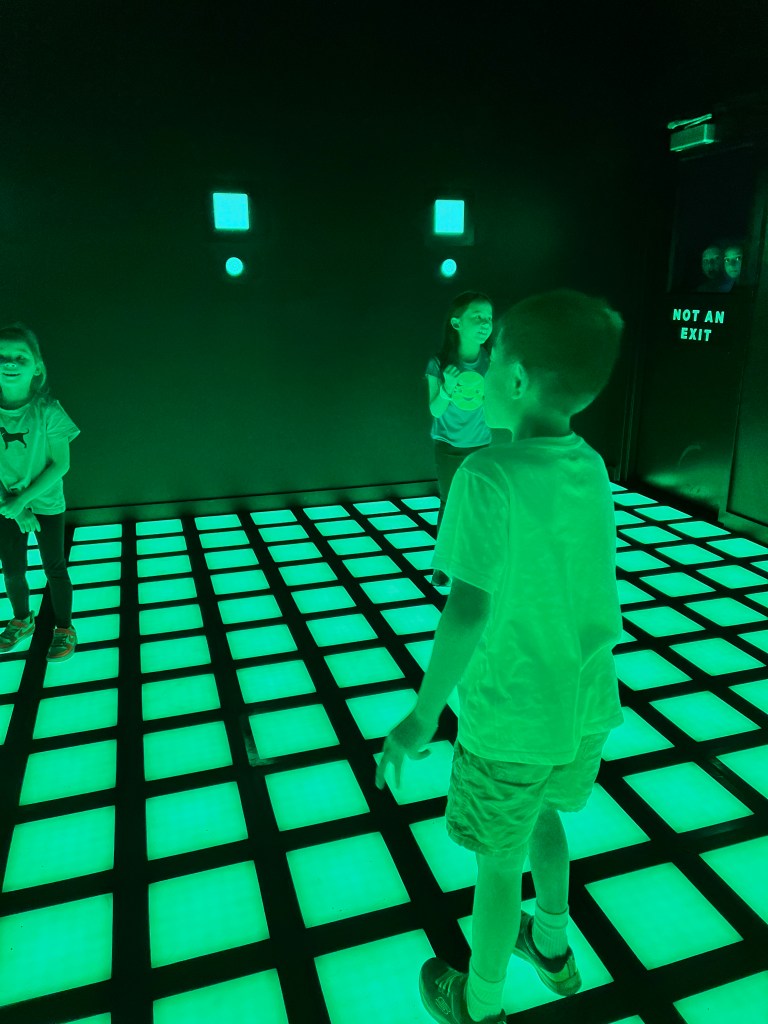
Activate is a blast, especially for kids who thrive in high‑energy, sensory‑rich settings and enjoy a bit of competition. We loved the MegaGrid, Control, and MegaLaser. For others, the experience can feel overstimulating, physically demanding, or emotionally tough. Keep in mind that while the minimum age to play is 6, the games are designed for adults. Activate warns that kids below age 10 will find the games challenging.
If you do take the kids, here’s our advice:
- Set expectations. Explain that it’s about fun and teamwork, not just winning (you might have to remind that to yourself as well). This might mean that game play slows down and games are modified. If you’re running a big group, establish turn taking of what games are being played to avoid game hogging.
- Take breaks. Plan pauses between rooms to help kids regulate and avoid overstimulation.
- Check yourself. It’s not just kids that can get dysregulated in these environments. If you feel overwhelmed or need to catch your breath, take a moment to reset.
- Know your child. If your child thrives on movement and novelty, it’s a great fit. If they’re sensitive to noise, lights, or fast competition, shorter sessions or selective games may work better.
In short, consider your child’s age, sensory profile, stamina, and emotional readiness before heading to Activate. With the right framing, it can be both a fun and skill-building play date.
Activate Games has two locations in the Atlanta area, 50 locations in the US, and more internationally.
Browse more Playdate Reviews.
Like this post? Follow Child(ish) Advice on Facebook, Pinterest, Instagram, and TikTok.
 Child(ish) Advice