
A little backstory for me. I was up in Virginia for work this past fall and was invited to come to my high school crew team’s afternoon practice. I was a crew coxswain for six years; starting in high school, through college and two years in Masters rowing. I’ve sat in on practices, but this was my first time a long while helping novice high school girls.
Crew is an amazing sport when it comes to culture, work ethic, and mental game. But the coach was quick to point out that he wasn’t seeing a lot of physical fitness and strength in this group of girls. While crew was fun and they enjoyed being on the water, they were still very much learning fundamentals and not speed. This is racing after all.
So how do you connect with a young person about being competitive? How do you motivate without turning into a zealous tiger parent? How young does this start?
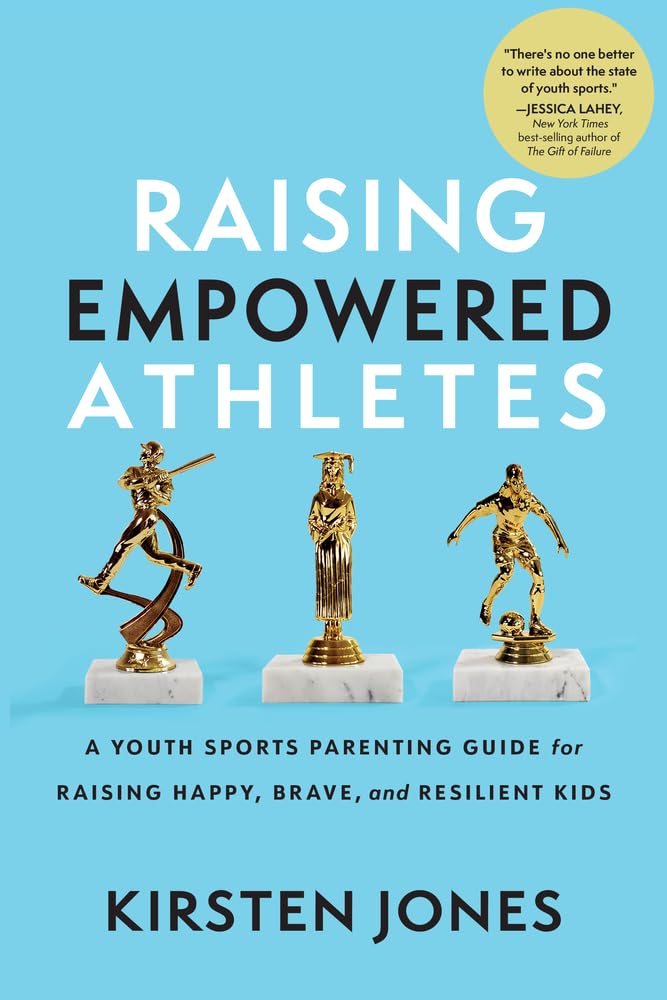
Raising Empowered Athletes: A Youth Sports Parenting Guide for Raising Happy, Brave, and Resilient Kids by Kirsten Jones. Kirsten, a Hall of Fame DI volleyball player from The College of William and Mary, and fourteen-year NIKE executive, is now a motivational speaker, writer and Peak Performance Coach. Her clients include teen athletes (and their parents), where she helps them learn how to reach their goals and release their limitations. She co-hosts the #RaisingAthletes Podcast with Susie Walton on iTunes and Spotify.
I picked up this audiobook because I wanted to see if there was a better way to not only navigate kids sports but ensure that sports are a positive experience all around. Yes, we’ve written about kids and team sports, but there is a progression from Little League to competitive play to high school and collegiate athletics. So much of that progression is not just about physical ability, but also work ethic, temperament, and balance.
Here are my top takeaways from the book:
A Time to Dabble and a Time to Specialize
Until the age of 13, there is no need to have your kid specialize in one sport. Jones supports letting your kid sample an array of sports and outdoor play while they are younger. This includes team sports and individual sports. This will not only let your kid find different ways of movement, but it decreases the chance of sports injury from repetitive movement. It also helps develop a beginner/growth mindset and emphasizes that at this age, sports should be FUN.
Kids can burnout on a sport if that is the only thing they are playing. As cool as you think it would be to have an athlete prodigy on track for the pros, it is entirely unrealistic and takes away from the enjoyment of the game. The book does touch on travel teams and how coaches will use “If they don’t capitalize now, they won’t make a high school team.” In some areas, this can be true depending on the sport; but then it is especially important to make sure that your kid is still having fun and you shield them from unnecessary pressure.
Additional stat: Only 8% of high school athletes play varsity in college (about 1 in 14). From there, only 2% are recruited to play sports professionally. Trying to get your kid a college sports scholarship or into a professional league should not be on your radar AT ALL during this age.
Ages 13 or older? Yes, then you may want to encourage your kid to keep it to 1-2 sports per year just to better manage time. This is middle school age and kids are starting higher level academics, requiring more homework. The level of team play and dedication is also higher. Practices are longer and travel is much more frequent. To have more than 1-2 sports a year, or more than one sport per season, is much harder to juggle schedule-wise.
Soft Skills
“If I have to choose between a player who has played 10 years of only basketball, versus one who has only played 3 years of basketball but has also played lacrosse and run track, I’m can pretty easily train them.” Coaches are going to pick the athletes that are moldable and have the flexibility to play different positions when they are needed.
Let’s do a quick list of non-talent attributes cultivated through sports:
Work ethic
Being on-time
Effort
Body language
Energy
Attitude
Passion
Being Coachable
Doing extra
Being prepared
WE over ME
These are all things that you can work on with your kid in any setting. So instead of pushing for extra camps or skills development, these traits are right in the parent wheelhouse. Keep in mind that a lot of the factors that determine athletic talent (height/weight/DNA/age) are not in your control. So, it’s these soft skills that are going to make a difference when it comes to making a team.
Intrinsic Motivation
Kids should have the intrinsic motivation to play what they want to play. If they are having fun and growing into their sport, they’ll find true joy and leadership while they are playing. They would also push themselves to get better/stronger/faster along with their teammates. However, other extrinsic factors can hinder their experience: an overzealous promotor parent, teammate chemistry, mental and physical health, and so on. Your job as a parent is to ask the right questions.
Is this still fun?
If you were to lose or get benched for a game, would you still want to play?
Is the sport affecting everything else you have in your life?
Do you think you are giving it your best effort?
Another stat: Seven in 10 kids drop out of sports by age 13 because they aren’t having fun anymore. If your kid is intrinsically motivated, they will want to stick with their sport and enjoy building their skills. If they are motivated for the wrong reasons, it will start to show as soon as they start facing challenges.
Parent Check
Just like in Centerstage, even the most talented kids feel parental pressure. KEEP YOURSELF IN CHECK. Negative criticism, embarrassing behavior, making comparisons, trashing the coach; these all become your child’s inner monologue and can be a powerful influence on their athletic experience.
Remember you are not their coach, you are a parent. Your support can come in the form of making sure they are fed, well-rested, prepared and that you are present.
The book is filled with stories from different athletes in all different sports who have worked with the author. Most clearly illustrate how different types of parental involvement can either be a help or a hinderance.
There is an additional chapter of how parents can navigate the college recruitment process, including a quick rundown of NCAA regulations on contracts and transferring. Even on a collegiate level, there are other non-sports factors to consider: location, student life, redshirting, team and school culture, etc. And as always, there is an emphasis on making sure that your kid is the one driving this boat, if they choose that path.
I liked this book because it reinforced that kids’ sports aren’t binary. The world isn’t made up of athletes and non-athletes. Sports are beneficial for all, especially when we’re talking about kids this young. The book brings the focus back on sports as outlets to keep kids active and build character. It also goes into building grit and resilience, making SMART goals, and keeping a team mindset.
While the book focuses on mostly competitive high school athletes, there is a lot to glean for parents of younger kids.
Browse here for more Child(ish) Reads.
Follow Child(ish) Advice on Facebook, Pinterest, Instagram, and TikTok.
Related Posts:
Coffee Chat: Sports Mom-agement
Youth and Sports Rec
A Resilient State of Mind: Dealing with Failure
 Child(ish) Advice