Motion Sickness and the Vestibular System

To get anywhere, we have to move; relying on forms of transportation to get us from point A to point B. However, it’s easier said than done when you’re a parent. Some kids don’t do well with movement outside of their control, including travel by car, boat, or even using the elevator. Thus, we get the ever-dreaded…motion sickness.

Motion sickness occurs when there’s conflicting information between what the eyes are seeing and what the body is experiencing. This can happen when we attempt to read a book while riding in a car, or experience turbulence while on a plane, or having “sea legs” after getting off a boat to name a few.

Continue reading

More Than Meets the Eye: Visual Perception

We are visual beings.

How we assess our environment, learn new skills, or consume entertainment is primarily through our eyes. We rely on our visual system so heavily that many times we don’t need our additional senses (touch, taste, hear or smell our surroundings) to know what’s going on.

So, if our kids overlook important visual details (like putting on a matching pair of socks), or can’t recall what they saw (“Where did you put your backpack?”), or have trouble discriminating between numbers and letters, it can be very concerning to us as parents. About 75% of classroom activities rely on the visual system.

In our throwback post, we learned that visual perception is the total process responsible for receiving and interpreting what we see. It involves visual-receptive (how our eyes move and focus on an object) and visual-cognitive components (how we interpret visual information).

When your child’s visual processing is compromised, we’re quick to assume that they need glasses/contacts or other visual aids. Although that may be the case, other factors can play a role as to why they’re seeing things differently.

Food Wars Revisited: Picky Eating Strategies

We all seek autonomy, including toddlers.

Around 10 months of age, infants begin to realize that they have free will and can refuse parental requests and demands, and that includes food. Thus, we give you the rise of the picky eater.

Pick Your Eater

It’s worth noting that picky eating behavior is normal for toddlers since they are beginning to learn their likes/dislikes and how to advocate for themselves. These new eating habits can be stressful, especially if you’re worried that your child isn’t eating enough as they grow. Typically, a toddler can tolerate at least 20 different food items across the different food groups.

Continue reading

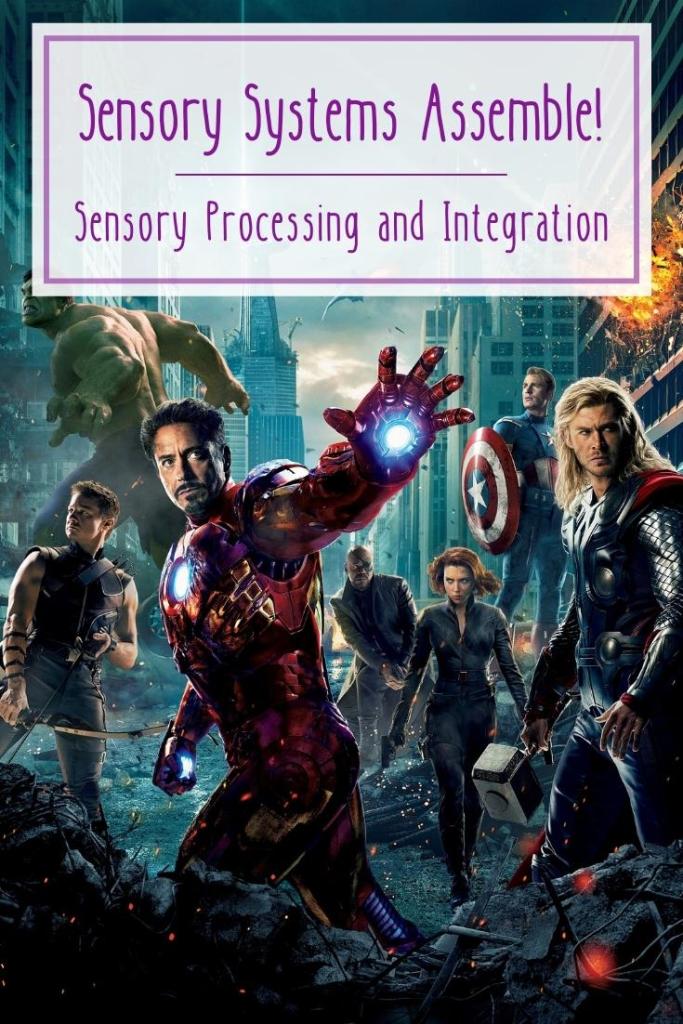
Sensory Systems Assemble!: Sensory Processing and Integration

Photo Credit: Marvel

We’re all familiar with the Marvel Cinematic Universe and the Avengers, right? An ensemble of superheroes coming together to stop formidable foes who threaten our world. Well, our sensory systems operate in the same way.

Each sense has their own set of responsibilities but will team up with one another to understand what’s going on around us and how to appropriately respond. This collab is known as sensory integration.

Sensory integration (SI for short, also known as sensory processing) refers to the processing, integration, and organization of sensory information from our body and the environment. This process allows us to participate in day-to-day functions, from self-care to socializing.

Continue reading

Trying to Focus: Kids and Attention

Children have short attention spans.

I know this seems super obvious, but it’s something my husband and I are currently working on with our almost 5-year-old. If he’s interested in a topic, he’ll be engaged for hours, like when he’s learning about animals or conducting science experiments. But give that kid a simple instruction and he’ll forget it or become distracted in seconds flat. Yeah, it sounds like every kid at this age, but it made me want to revisit what I currently know (and research more) about attention and how to best help my son improve it.

Continue reading