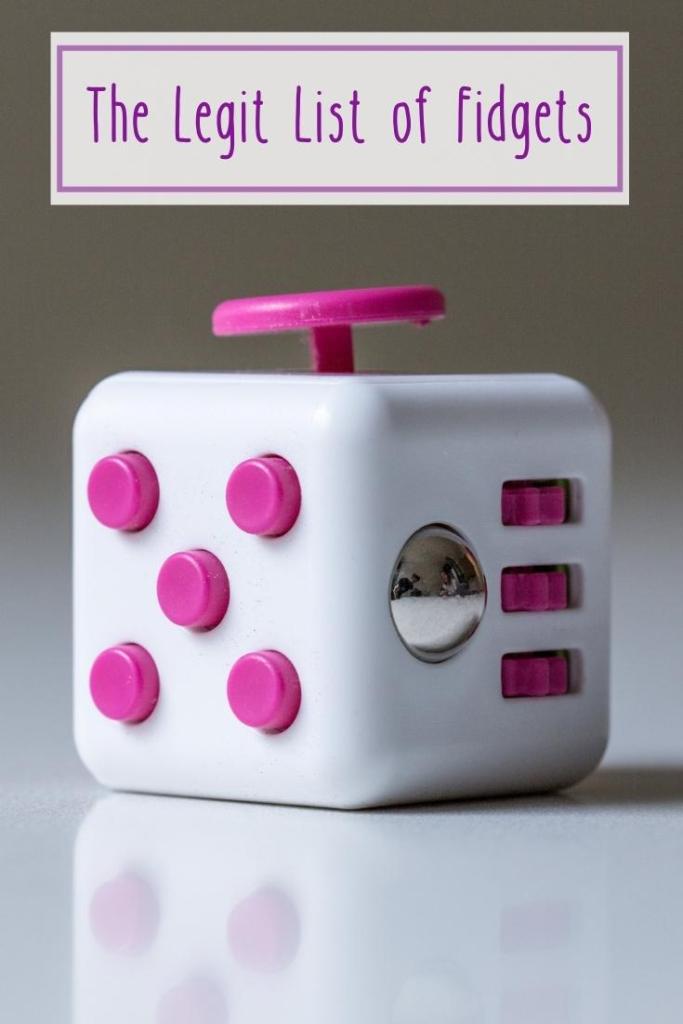
The Legit List of Fidgets

Fidgets are designed to allow us to self-regulate during times of stress or boredom, but no one fidget is created equal. Because our sensory needs are unique to us, what may work for you may not work for a friend, co-worker, or kid. So how do you know what works for your child? Rather than strolling down the toy section or browsing the endless lists of fidgets online, we broke it down to help you and your kiddo find that “just-right” fidget.

Continue reading

Quit Fidgeting: What’s the Deal with Fidget Toys?

What do stress balls, spinners, and Pop-Its have in common? They are fidgets and you can find them anywhere and everywhere.

Fidgets are self-regulation tools designed to help children (and adults) focus and attend to tasks by helping maintain an appropriate arousal level. Their genesis stems from our automatic need to move during times of stress or restlessness, releasing excess energy or soothing our nerves. The idea is to feed our sensory system the movement/touch/deep pressure its seeking when we aren’t able to just get up and move, like when kids are supposed to sit in their seats during class.

Continue reading

Don’t Hold Your Breath: Deep Breathing to Regulate

We know it’s important to breathe. Aside from a beating heart, it lets us know that we’re still alive. But it’s also an indicator of how we are doing internally.

From our last yoga post, breathing serves as a reflection of our emotional state, stress level, and state of mind. In our rhythm and timing post, we talked about how the brain structures that are responsible for timing are also linked to the regulation of our emotions, behavior, and arousal. By controlling our breath, we not only alter our mood, but also our rhythm and timing. But how do we teach our kids how to breathe? Don’t they just do it?

For this post, we’re focusing on breathing techniques to calm kids down in moments of stress or high arousal.

Continue reading

Perfect Timing: Rhythm, Timing, and the Brain

Timing is everything. For the most part, that statement is true.

Everything we do requires rhythm and timing. EVERYTHING. Think about it: walking, talking, reading this sentence, etc. It all relies on a pace and a pattern to complete them.

We’ve talked in previous posts about body awareness and how it affects bilateral coordination and motor planning, but rhythm and timing ensures that those movements are fluid when interacting with objects and people around us. Most of the time, you hardly notice it until you have a clumsy moment walking or stuttering over your words when in conversation.

Continue reading

Post-Holiday Hangover

The glimmer and glow of the holiday season has seemingly come to an end.  The lights and decorations go back in their boxes, the tree is put away (or finds its new purpose as mulch), and the joy of opening presents will need to wait until the next birthday or holiday event. Although most of us are just fine with the holiday season ending and look forward to going back to the usual, some of us, especially kiddos, struggle with the shift.

Continue reading