What Makes a Good Parent?

We all know that parenting is not for the faint of heart. Parenting is a skill developed over time and is influenced by many, many factors. We know families have tough days and we know to take people’s perfect Instagram feeds with a grain of salt. But whether you have kids, are planning to, or are watching from the sidelines, we all have our opinions on what good parenting looks like; and sadly, we are prone to judge.

We look at kids and how they behave, and we assume it’s because of parenting. We may witness a child have a tough moment and depending on how their parent responds, we judge if they handled it well or not. We might even investigate our own childhoods and determine what parental traits are worth keeping and which ones get the boot. But what makes a good parent, really?

Continue reading
Coffee Chat: The Parent Test

Last month, I saw an IG promo for The Parent Test on ABC. It’s a competition-ish show, originally from Australia, on 12 different parenting styles and which one is the most effective.

Each week, four of the 12 families are given two filmed challenges. The other eight sets of parents watch and give their critiques based on how the parents handle their kids in the challenge.

Immediately, we knew we were watching and would most likely be cringing for every single episode. A tweet said it best, “This show is triggering, messy, and impossible not to watch.”

We watched the first episode together and the next with our husbands, and so far we’ve been decently surprised. Here are our initial thoughts:

Continue reading

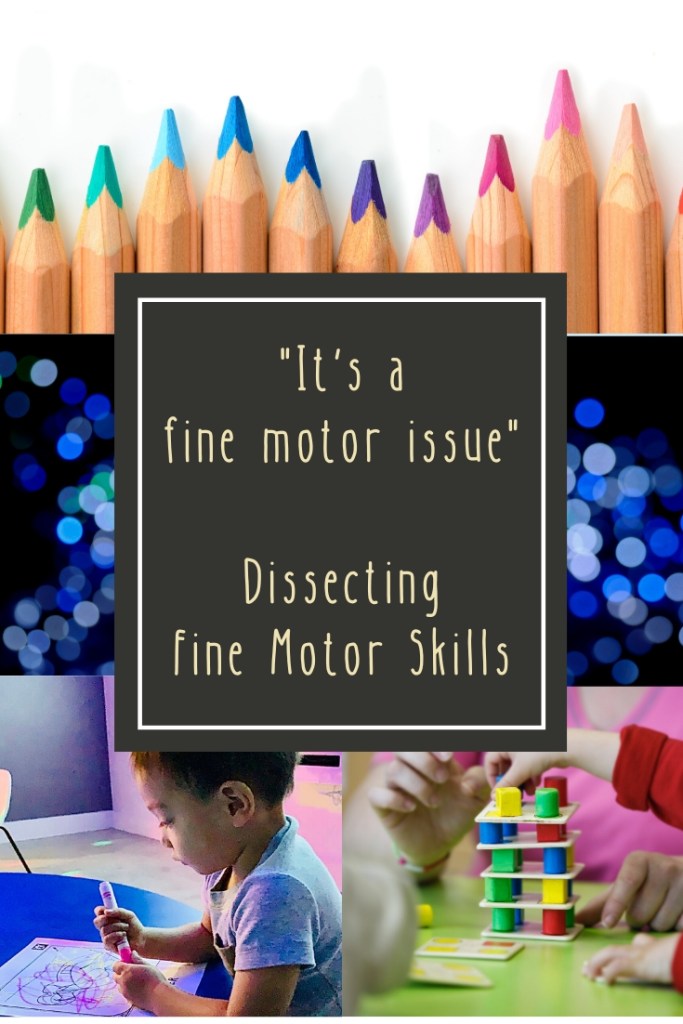
“It’s a Fine Motor Issue…”

Dissecting Fine Motor Skills

A common reason that children are referred to OT is for “fine motor issues.” However, it usually isn’t just a fine motor issue. There could be other factors involved.

What are fine motor skills? They are the coordinated movement that involves the use of fingers, hands, and arms. This includes:

  • Reaching
  • Grasping
  • Object manipulation (buttoning a button or putting coins in a piggy bank)
  • Tool usage (eating utensils and writing utensils)

These skills develop at birth and work with other areas of development, such as vision, touch, and postural and proximal strength/stability.  

Continue reading