Coffee Chat: Kids and Supplements

Last fall, I was chatting with other Girl Scout moms at our annual campout and someone left a pack of Grüns in the cabin. They’re superfood gummy bears that are supposed to do a ton of awesome things like promote gut health and give you energy and fulfill your veggie requirements, etc. I had seen these on my IG feed, so me and a couple of the moms tried them out. Big letdown for me (they were the no sugar added variety), but overall a good reception. One of my girls liked them, and one other scout was like, cool.

That led to what other “wellness” things each of us had tried in our routine; from special-order vitamins, to supplements that replaced caffeine, to Liquid IV and protein. And what do you know, later that week I had ads all over my accounts for kids’ vitamins, gummies, and patches.

Maybe it’s just that we’re getting older, but the lineup keeps growing: a daily multivitamin to fill any nutritional gaps, collagen and biotin for hair and nails, melatonin for sleep, probiotics for gut health, B‑complex and magnesium for energy, vitamin D for mood…the collection just keeps expanding. Creatine, the powder that my high school boyfriend was taking to get “ripped”, is now marketed to women as a supplement.

But what adds an extra layer of weird is that many of the supplements have a kids version. Beyond the classic Flintstones vitamins, there’s now a kid‑friendly version for nutrition, immunity, focus, growth, you name it. But why? And since when?

Continue reading

Course Notes: Allergies, Pt. 2

Allergies touch most of us at some point: sneezing fits, itchy skin, watery eyes set off by pollen, dust, or a pet brushing past. But food allergies are a different experience entirely. They’re far less common, and they’re not the same as food sensitivities.

My own mild food allergy, paired with watching a close friend navigate her daughter’s severe reactions, sparked a deeper understanding about how profoundly these conditions can shape childhood. For many families, food allergies carry a unique developmental weight because they show up during meals, classroom snacks, birthday parties, and playdates—moments that are supposed to feel simple and safe.

Continue reading

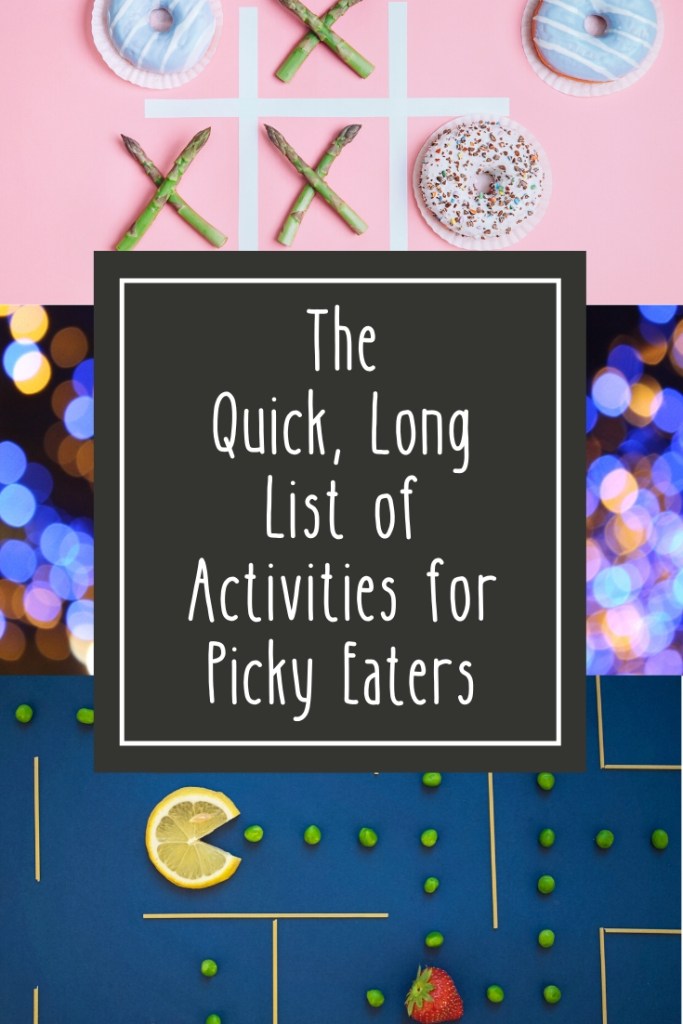
The Quick, Long list of Activities for Picky Eaters

The Quick, Long List of Activities for Picky Eaters

Picky eaters may need to see food from a different perspective. Playing with food may seem counterintuitive, but remember, eating at this age is about discovery. Give these activities a try:

  • Edible art
    Allow your child to create artwork using various food items.
    Incorporate foods that vary in texture, temperature, and taste, like leafy greens, dried grains and beans, and raw vegetables. You can also use fruits or vegetables as stamps or stencils.
  • Let food be the paint
    Have your child paint with pudding, yogurt, or Cool Whip. Add food coloring to get different colors. Instead of doing this on paper, use parchment, aluminum foil, or a cookie sheet for easy clean up.
Continue reading

Food Wars: Eating from an OT Perspective

Eating can be hard for a child. The moment a child begins to establish what they want (and don’t want) to eat, they attempt to express themselves in a multitude of ways that aren’t always straightforward. 

Out of nowhere, they start to refuse what is on their plate for what could be an assortment of reasons. For some, they may only want the same foods with minimal taste (fries and chicken nuggets sound familiar?) or they’ll frequently seek out candy. Sometimes they may become messy eaters with food all over their face or constantly overstuffing their mouths with food. 

From an OT perspective, there can be a few reasons for food aversion. 

Continue reading