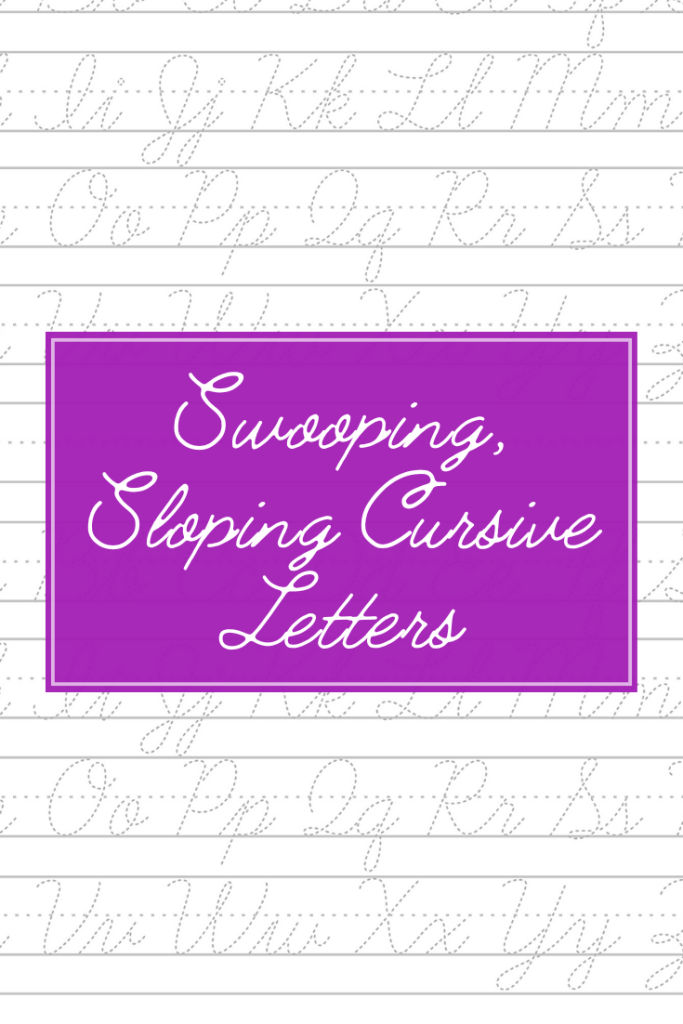
Swooping, Sloping Cursive Letters

If handwriting is the foundation of written expression, cursive is the next layer of fluency. After children learn to shape letters and build the motor patterns of print, cursive offers a new pathway that emphasizes flow, rhythm, and efficiency.

Despite its disappearance from US school curriculum at the start of the 2000s, cursive is making a real comeback in many parts of the United States. This return revisits the question: Is cursive important?

Continue reading
The Kid Brain on Handwriting

In a world where messaging and voice‑to‑text are becoming the norm, handwriting can seem outdated; but it’s not, especially for children. Beyond sending a message or jotting down an idea, handwriting supports parts of child development that other modes of written expression simply can’t replace. Even in a digital world, it’s still one of the most efficient ways to build the cognitive, motor, and language systems kids rely on for learning.

Continue reading

Old School Skills/New School Tech

Growing up, it seemed like we had a lot to accomplish. It wasn’t just about manners or good grades, but mastering day-to-day skills by a certain age or we were doomed. Can you hear it now? “If you don’t learn this, you won’t make it as a grown up.”

In fairness, these skills were necessary to participate in daily activities at the time. We needed to know how to tie our shoes by the age of 5 or we ran the risk of tripping over ourselves. We had to know how to read an analog clock or we would miss the bus. 

Now, we have a good amount of tech that has replaced a lot of those hard line demands that we had as kids.

Continue reading

Handwriting Q&A

Handwriting is a complex skill. It requires our sensory and motor mechanics to work harmoniously together to make our writing remotely legible. And when we start working with our kids on how to write letters, numbers, and eventually words and sentences, we notice that their writing is never going to look like our own. That’s when we question what is “normal”?

From their pencil grasp to writing upside-down, we wonder if these strange tendencies are just a quirk of little kids or something to be really concerned about.

Continue reading

Let There Be Light: Flashlight Play for Visual Processing

Let There Be Light: Flashlight Play for Visual Processing

Oc-You-Low-Motor.
Oculomotor relates to the motion of the eye. The eye muscles are just like any other voluntary muscle, they need to be exercised! This flashlight activity is the perfect example of activating and exercising the eye muscles and still having fun.

Continue reading