Our Activate Playdate Review

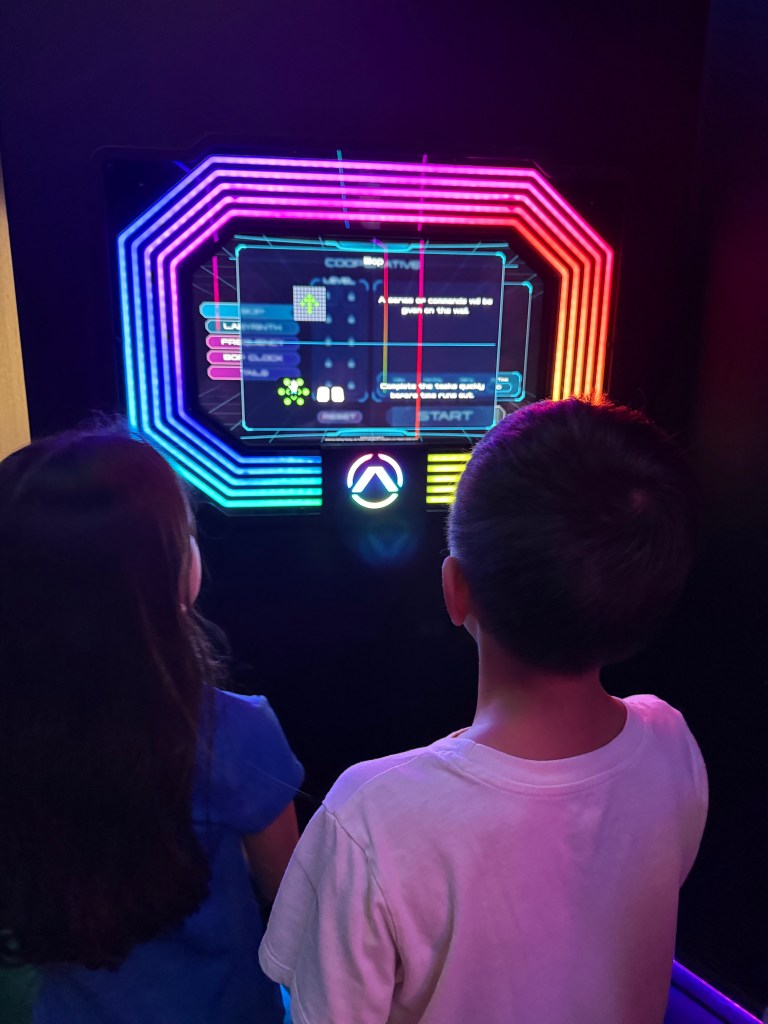
For our last 2025 Playdate Review, Mary and I headed over to Activate Games. We had brainstormed this venue a few years ago, but our kids were just under the age recommendation. Now that they are 7 and 8, we decided to give it a try and see how theyโ€™d fare.

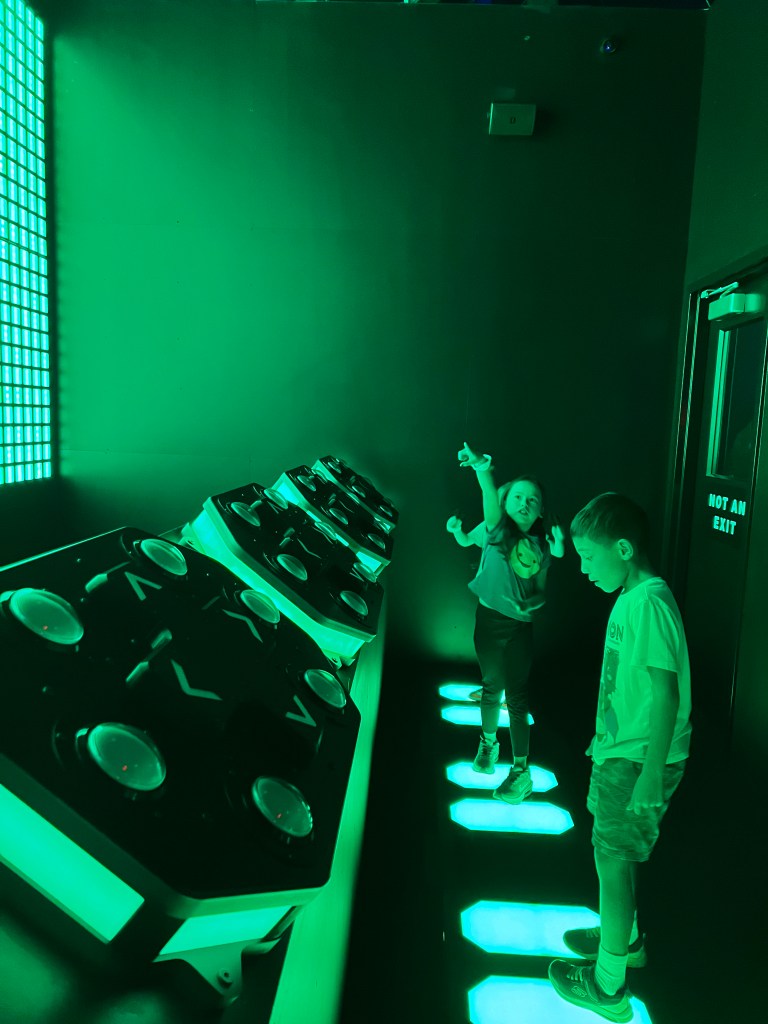
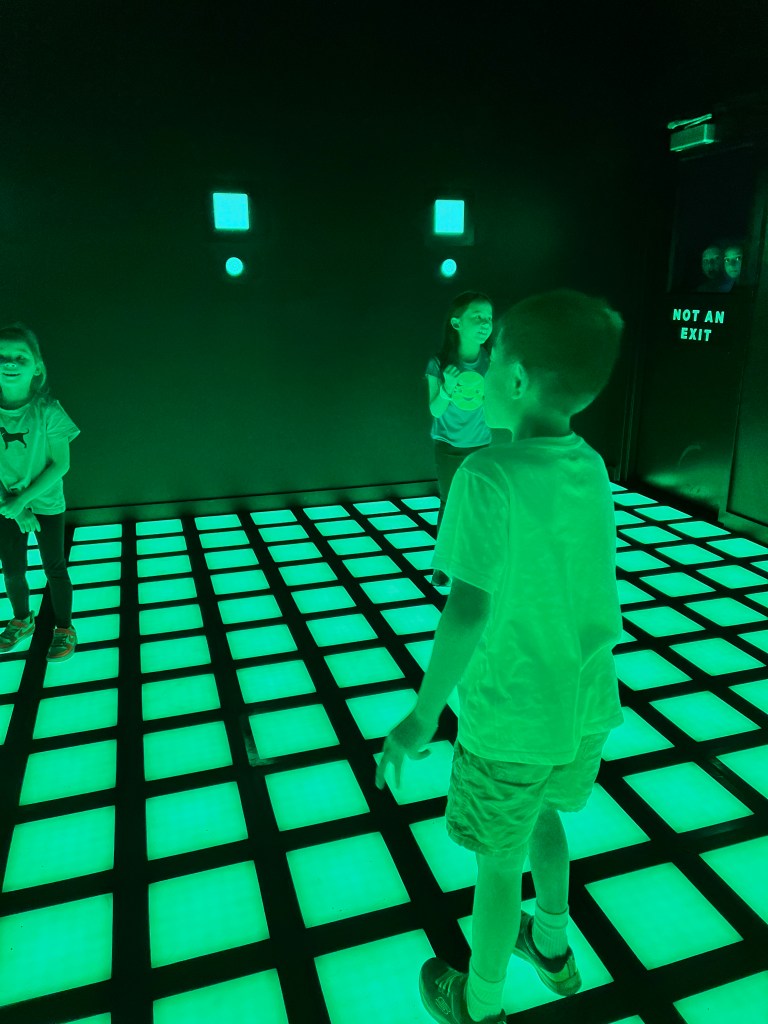
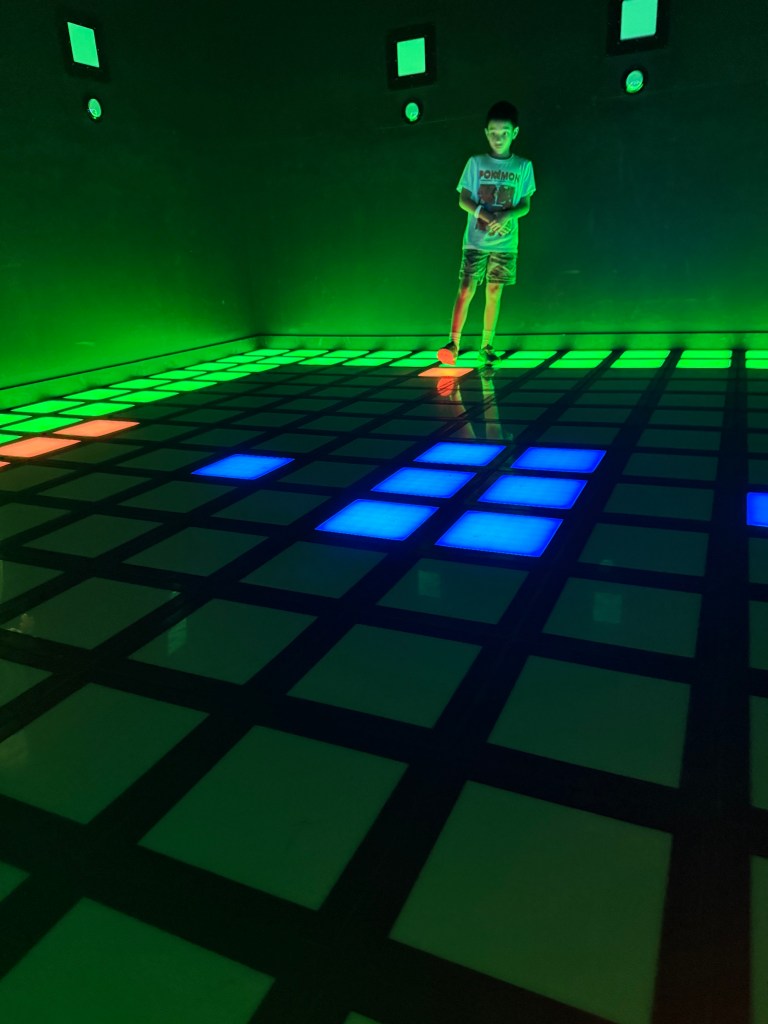
Activate is an indoor, high-tech gaming facility where you and your friends physically step into interactive game rooms that blend technology, puzzles, and movement. Itโ€™s like stepping inside Nick Arcade. The environment reacts to your movements in real time. Each themed game room is filled with lights, sensors, and challenges:

  • Laser mazes: Duck, dive, and dodge beams to reach the other side.
  • Arcade-style basketball hoops: Fast-paced scoring challenges.
  • Puzzle rooms: Memory, logic, and teamwork tasks.
  • Climbing and agility rooms: Test your speed and coordination.

The kids have all done their fair share of video gaming and interactive gaming with their consoles, VR, laser tag, and Immersive Gamebox. Mary and I have also had a couple adult group outings with immersive gaming. Could we shepherd them into a new gaming world??

Continue reading

Our Escape Room Playdate Review

When we first came up with doing playdate reviews, we hated that we couldnโ€™t find an escape room. For every spot in our area, the minimum age was maybe 10. Fast forward a year or two, and I get a flyer for Escapology at my girlsโ€™ field hockey practice. A new space was opening up literally 10 minutes from us. I couldโ€™ve kissed the mom (who happened to be the owner) who said that they didnโ€™t quite have a minimum age.

โ€œHow could this be?โ€, you say. KIDS MODE!

Escapology is an immersive, and always private, escape game where players are gathered inside a themed room and must complete their mission before time runs out. Stepping inside a real-life adventure, they must find hidden clues, crack codes, and solve puzzles to make an escapeโ€”all in an hour.

Continue reading

Course Notes: Diagnosis and Reframing Perspective

Iโ€™m not gonna lie, completing this ADHD certification and writing these posts has driven me down a rabbit hole. โ€œDo I have ADHD? Does my son have ADHD?โ€

While he is a 7-year-old, his past teachers have mentioned focus issues and recently, heโ€™s been forgetting items to either take to school or bring back home. Is this something I need to be concerned about or is this just an age-appropriate phase?

For Patti, ADHD runs in her family. So even though she does not have a diagnosis, she has been on the lookout for flags since the beginning. You can imagine how these coffee chats have gone between usโ€ฆ

If you suspect your childโ€™s inattention or impulsivity may be more than the norm, or you notice that itโ€™s affecting parts of their daily routine, hereโ€™s what you can do.

Continue reading

Course Notes: Meds and Management

This is a good time to reiterate that our Course Notes series is just that. Occupational therapists need to take a certain number of continuing ed classes each year. These classes are geared toward therapists, counselors, practitioners, etc. But from these classes, there is a ton of really great information that I think can be helpful for parents as well. I am in no way diagnosing, prescribing or treating a specific person. Now that that is covered, letโ€™s get to ADHD, Part 3.

ADHD affects how information is taken in and processed due to its alterations in brain structure, neural connectivity, and neurotransmitter levels. These changes impair the executive functions, resulting in difficulties with attention, recall, and self-control. While there is no โ€œcureโ€, it is considered one of the most treatable conditions out there. So, what are the most effective management treatments out there for child ADHD these days?

Continue reading

Course Notes: The ADHD Brain

ADHD is a neurobiological developmental disorder that impedes oneโ€™s executive functions, but what causes it? ADHD has long been a subject of intense scientific scrutiny, from its origins to whether itโ€™s even a real thing (it is, btw). However, with an explosion of research on the topic in the last 20 years thanks to the completion of the human genome project in 2003, weโ€™re getting closer to solving to the riddle of what triggers the disorder that affects millions of children (and adults) worldwide.

Continue reading