Our Rage Room Mom date

Yay! New blog feature.

We’ve written extensively on PPD and how important it is for moms to take time for themselves. This recharges our social battery and keeps us balanced, so our entire lives aren’t completely ruled by our kids.

Looking forward, I came across a teen parenting account that said that one of the reasons teens stop looking to their parents for advice and quality time is because their parents aren’t fun. During high school, my parents never really had friends. They would work, make dinner, and watch something on the couch…every…damn…night. I love an introverted bed rot, but seriously no other people anywhere in the radar? Not even a best friend that I’ve ever heard of?

I feel like most of the parents I appreciated growing up were those that had their own social lives; they played more roles than just being a parent or an employee. They had interests and hobbies and would go out for girls nights. Their personal schedules were just as involved as their kids’. Overall, I feel like their homes were just lighter; and consequently, their villages were bigger.

So, Mary and I would like to propose a trade. We will exchange two playdate reviews, for two Mom date reviews. We love doing fun stuff with our kids, but we’d also like to try out some fun, new things that are a little more age-appropriate for us.

Continue reading

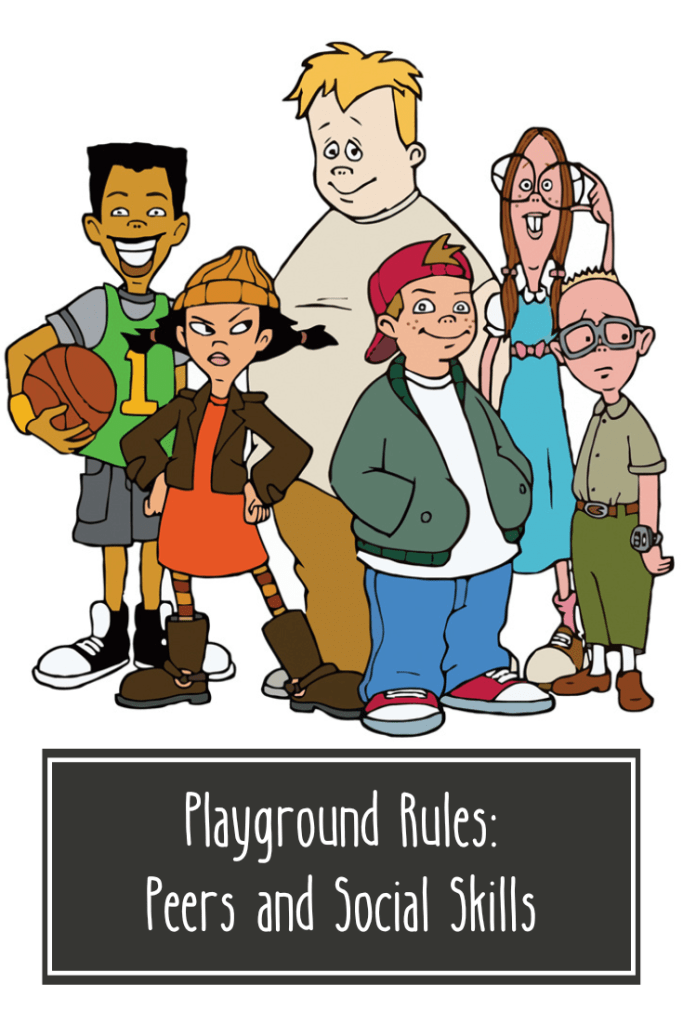
Playground Rules: Peers and Social Skills

Image credit: Recess

Parents can only do so much. In our kid’s early childhood, we try our best to teach and model everything they need to know to thrive. But eventually, they need to test their skills in real-life situations, and that’s most likely going to come on the playground.

When parents in the clinic would stress over their child’s social skills, I would say “playground rules,” meaning that kids best learn socialization in a setting with their peers and with limited interference from their parents. While the home serves as a training ground for trial and error, peers provide real-time feedback and refinement of those skills.

Continue reading

Child(ish) Reads: Raising A Socially Successful Child, Pt. II

When we say “socially successful”, we mean making friends. Yes, how our child conducts themselves in public spaces in a way that is socially acceptable is one thing. Manners and etiquette are explicitly taught.

However, making friends is not exactly easy for most. Confidence, self-esteem, temperament; these all factor into the process personally. But then there is the reciprocation, the two-way street. Does this person like me back?

In Raising a Socially Successful Child, Dr. Stephen Nowicki explains the Friendship process; the different stages of how we start and maintain relationships.

Continue reading

Child(ish) Reads: Raising a Socially Successful Child

When I first saw this book, I was interested in the nonverbal communication aspect. Yes, there are lots of parenting books about helping your kids make friends and navigate social circles, but the nonverbal factors gave this book a bit of an OT edge.

Raising a Socially Successful Child: Teaching Kids the Nonverbal Language They Need to Communicate, Connect, and Thrive by Dr. Stephen Nowicki. 

Continue reading

Repeat After Me: Kids and Modeling Language

Kids are like little sponges and they absorb knowledge through observation, exploration, and experience. Learning to communicate and socialize appropriately is no different. From quoting movie lines, repeating encouraging phrases, or even calling us “Bruh”, they soak in everything they hear and try to apply it in everyday conversation whether they fully understand it or not. While their process trial and error can be amusing, it raises the question of how their models (primarily us) can shape their lives, their friendships, attitudes, identities, and their self-esteem and confidence.

Continue reading