Child(ish) Reads: Dopamine Kids, Pt. 1

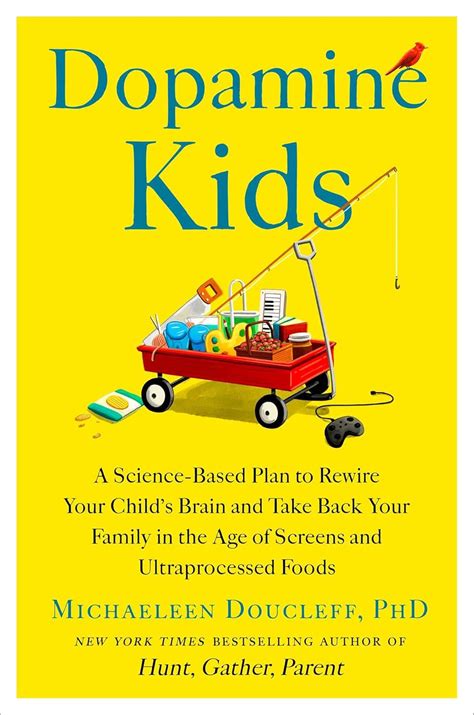
I was very excited to receive my pre-ordered audiobook of Dopamine Kids by Michaeleen Doucleff. Yes, the same Michaeleen Doucleff from Hunt, Gather, Parent. It has been 5 years since I reviewed that book, and I love how Dopamine Kids fits in so perfectly with all of our Brain-Body posts this month.

Dopamine Kids: A Science-Based Plan to Rewire Your Child’s Brain and Take Back Your Family in the Age of Screens and Ultraprocessed Foods by Michaeleen Doucleff.

Blurb: For the first time in history, we are inundated with “dopamine surges” inside our brains, pulling us to technology and ultraprocessed foods like magnets—every day, many times a day. Over the past decade, neuroscientists have finally begun to figure out how these surges alter our choices, our habits, and even our moods. We’ve learned how dopamine can drive adults and kids to engage in activities that we don’t actually enjoy—activities that can make us feel sad, lonely, anxious, and depressed.

Continue reading

Reader’s Digest: The Gut and Child Development

It seems like we’ve always treated the gut as something that matters.  Just look at our language: gut instinct, you’ve got guts, gut‑wrenching. We use these phrases because, on some level, we know the gut is central to how we sense and respond to the world. We’re not wrong though.

When we say gut, we are referring to the long digestive tube inside the body that starts from the mouth all the way to the stomach and intestines, also known as the gastrointestinal tract (the GI tract). But it does far more than break down food. It’s a major sensory, immune, and communication hub that helps shape how a child’s body takes in and responds to the world.

Because it’s in constant conversation with the brain through neural, hormonal, and immune pathways, the gut plays a meaningful role in mood, sleep, attention, and learning. A healthy, well‑nourished gut becomes a powerful driver of how children grow, adapt, and thrive.

Continue reading

Course Notes: Allergies, Pt. 2

Allergies touch most of us at some point: sneezing fits, itchy skin, watery eyes set off by pollen, dust, or a pet brushing past. But food allergies are a different experience entirely. They’re far less common, and they’re not the same as food sensitivities.

My own mild food allergy, paired with watching a close friend navigate her daughter’s severe reactions, sparked a deeper understanding about how profoundly these conditions can shape childhood. For many families, food allergies carry a unique developmental weight because they show up during meals, classroom snacks, birthday parties, and playdates—moments that are supposed to feel simple and safe.

Continue reading

Child(ish) Reads: The Family Dynamic

When I was in college, our rowing team competed at The Head of the Charles in Boston, and a group of us stayed in one of the dorms at Harvard. The girl we stayed with was a friend of some of our rowers and she had a twin brother who also attended Harvard.

So, there’s two high-achieving kids in the same family who are Harvard educated. I found out later that they had triplet younger sisters, all of which excelled in their own respective sports, including rowing and wakeboarding. Later, all five of the siblings would graduate and enter the fields of medicine and public speaking. How? Just… how??

Continue reading

Attention Span and Learning

Before a child can remember a story, solve a problem, or follow a direction, their brain must stay with the task long enough to take it in. Their ability to focus, shift, and sustain attention shapes how well they absorb information, make connections, and build new skills.

However, a growing body of research points to shorter attention spans among young children, especially in the early grades. Studies of children ages 7–12 reveal measurable declines in sustained attention, including a reported 27.4% drop during continuous-focus tasks. Teachers echo these findings, noting that many students now struggle to stay engaged for more than 10–15 minutes. Oh, and did we mention that reading stamina has dropped as well?

We know what you’re thinking. “Surely, this won’t be MY child…”
But then you notice exactly how often you’ve had to repeat or remind or redirect your kid, over… and over…and over again.
And suddenly, “Is this f’n play about us?”

Attention is critical for learning because it’s the gateway skill that makes all other learning possible. Without it, nothing can truly stick.

Continue reading